Veyns Prepares to Launch Palm Vein Authentication Readers, Payment Terminals and Developer Tools.

Nov 21, 2026

Veyns is developing palm vein readers, payment terminals and software tools for biometric authentication, and the company is preparing to launch by the end of Q4 2026.

BVI, British Virgin Islands, November 21, 2026 -- Veyns is preparing to launch its palm vein authentication technology by the end of Q4 2026. The company is building compact palm vein readers, payment terminals and software tools intended to bring biometric authentication into everyday digital and physical environments. It sees applications across payments, account access, digital wallets, secure buildings, loyalty programs, ticketing and enterprise authorization.

The technology is designed to identify a person through the vascular pattern and liveness beneath the skin of the hand. The idea is that identity should not depend on something a person remembers, something they carry or something another company stores on their behalf. It should begin with the person.

There is a strange contradiction at the heart of modern technology. The world has become faster, smarter and more connected, yet proving identity has somehow become more complicated. A typical person now moves through a maze of passwords, PINs, authentication apps, recovery emails, security questions and one time codes just to access the services they use every day. Veyns thinks that system is reaching the end of its useful life.

Eventually, its ambitions go much further. Veyns believes the same identity layer could form the basis for reusable KYC, portable credentials, digital identity and other systems that currently require people to repeatedly prove who they are to different organizations.

The company is entering the market at an unusual moment. Artificial intelligence is rapidly changing the economics of impersonation. Voices can be cloned. Images can be generated. Documents can be manipulated. Password databases continue to be compromised, while phishing attacks have become increasingly difficult for ordinary users to identify.

In that environment, confirming that a real person is physically present, and that the person is actually who they claim to be, is becoming a much bigger problem. Palm vein technology relies on patterns beneath the skin rather than visible features alone. Veyns is also building around liveness verification, allowing a system to determine that it is interacting with a living person rather than simply a copied representation.

The company’s broader argument is that authentication should eventually become almost invisible. Instead of opening an app, searching for a code and typing six digits into another screen, a person could simply present their hand. Instead of carrying an access card, the individual becomes the credential. Instead of remembering a password, identity itself becomes the authorization.

Other forms of authentication have become normal quickly. Contactless payments once felt novel. Facial recognition on a phone did too. Today, both happen with barely any thought.

Veyns first edition: POS machine and Bio signature disk.

The team at Veyns strongly believe that palm vein based identity could follow a similar path. A central part of its strategy is that the hardware is not the final product.

The company is developing SDKs and APIs that would allow businesses and developers to build their own applications around the technology. That opens the possibility of Veyns becoming an infrastructure layer rather than simply another hardware based company. For Veyns, that infrastructure could begin with payments and access, then expand into financial services, identity verification and eventually areas such as travel, government services and digital credentials.

Any identity technology has to earn trust, particularly when it sits between people and some of the most sensitive systems they use. Privacy, interoperability and security will matter as much as convenience.

Veyns is approaching that problem differently from traditional biometric systems. The company says it does not store raw biometric data or images of a user’s palm vein pattern. Instead, the scan is converted into mathematical vectors, which are then transformed using cryptographic hashing to create a secure representation used for verification.

Rather than building a central database of biometric images, Veyns is designing its infrastructure so that the original biological information is not retained in a form that can simply be viewed, copied or reconstructed. As identity becomes increasingly digital, the question is no longer only whether a system can recognize someone accurately. It is whether it can do so without creating another valuable repository of deeply personal data.

Veyns is betting that the future of biometric identity will depend not just on better recognition, but on better privacy methods and the efficiency behind it. The company sees the opportunity as a change in expectations, in which typing passwords, carrying access cards and repeatedly uploading identification documents come to be seen as unnecessary friction left over from an earlier version of the internet.

The company is still early and is preparing to launch by the end of Q4 2026.

About Veyns

Veyns Inc. develops palm vein authentication hardware, including the Bio signature disk and the Palm Vein POS terminal, along with open SDKs, APIs and developer tools for apps, wallets, payments and access. The company says palm vein data is converted into a secure encrypted template and is not stored as a raw biometric image.

Contact Info:
Name: Marvin
Email: Send Email
Organization: Veyns
Website: https://veyns.io

Release ID: 89210254

If there are any deficiencies, problems, or concerns regarding the information presented in this press release that require attention or if you need assistance with a press release takedown, we encourage you to notify us without delay at [email protected] (it is important to note that this email is the authorized channel for such matters, sending multiple emails to multiple addresses does not necessarily help expedite your request). Our diligent team is committed to promptly addressing your concerns within 8 hours and taking necessary actions to rectify any identified issues or facilitate the removal process. Providing accurate and trustworthy information is of utmost importance.

More News

Wardrobe updates just in time for the holidays

Nov 20, 2026

Wardrobe updates just in time for the holidays

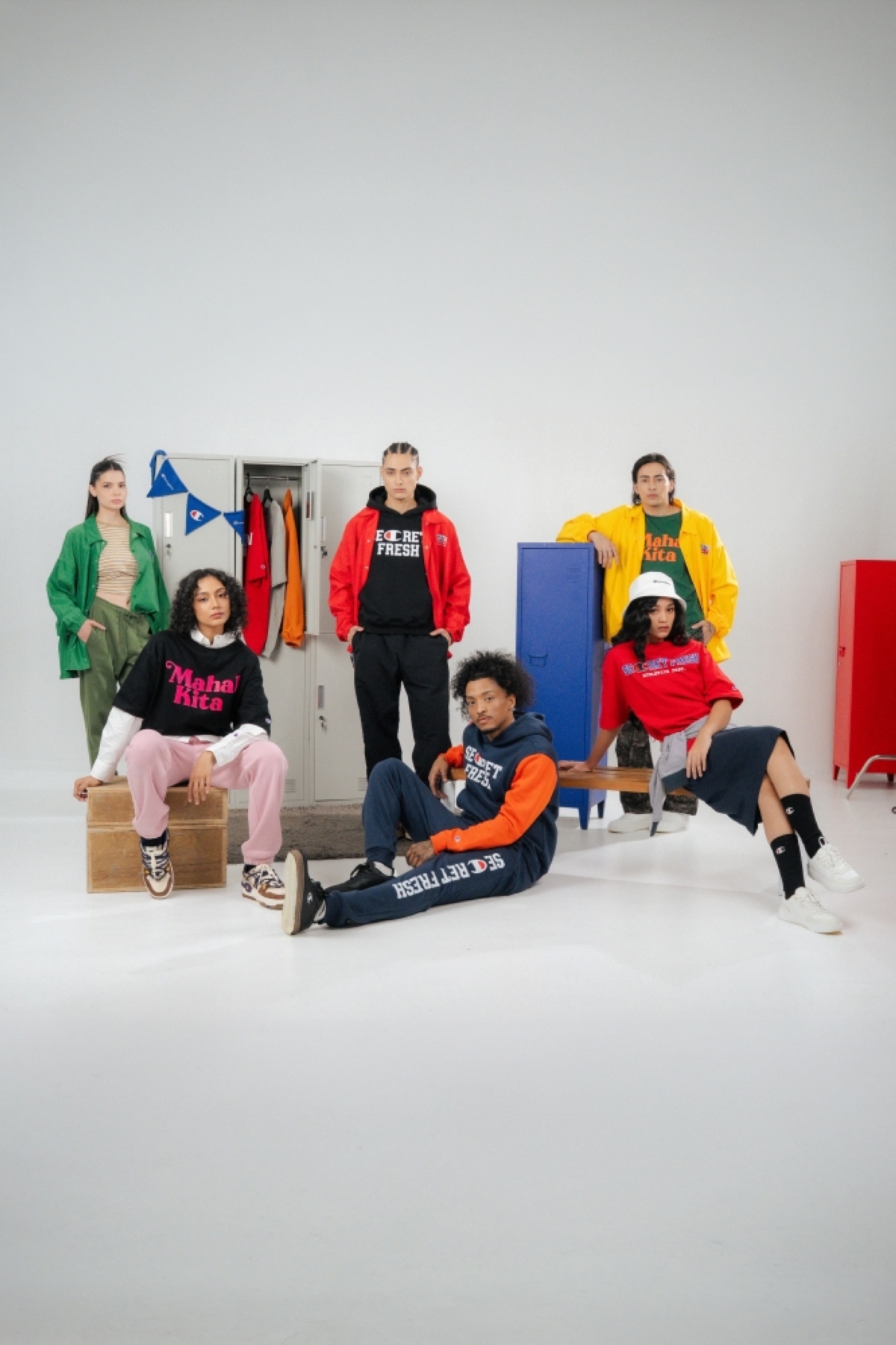
Those who look forward to celebrating the holidays with a new pair of shoes, an eye-catching bag or a crayon-bright top will be spoiled for choice this year and well into the next.  This month alone, two footwear brands and two collabs were announced one after the other.  ASICS Sports footwear and apparel brand ASICS is establishing its corporate presence in the country with Asics Philippines, Inc. Founded in 1949 by Kihachiro Onitsuka, the brand built its legacy on the Latin phrase “Anima Sana In Corpore Sano” (Asics), which translates to “A Sound Mind in a Sound Body.” Filipinos have long had access to the brand’s products as they were widely distributed by local partners. By establishing direct local operations, ASICS Philippines, Inc. intends to seek out opportunities to collaborate with local creatives, athletic organizations, and run clubs.  “The Philippines is a vibrant and rapidly evolving market for sports and active living,” said Eriko Takamoto, ASICS Philippines’ country manager. “We’re excited to bring the brand closer to everyday Filipino life through innovative footwear, local partnerships, and immersive brand experiences that show how good movement feels — for both mind and body.” At the press briefing, Takamoto was reticent and did not say where they would be opening company-owned stores.  “We want to be present where people need us. We also want to encourage more Filipinos to stay active. I read that just 15 minutes and nine seconds [of moderate daily exercise] is enough for people to change their lives.”   Filipino shoppers can now expect real-time access to global product drops, including signature performance flagships, high-performance court footwear, and the hugely popular Sportstyle heritage line that features retro-runner staples. Clarks Another footwear brand, Clarks — this time with 200 years of history in Somerset, England — has launched a campaign for its Cloudsteppers range.  Known for its signature “walk on air” feel, the footwear range combines lightweight comfort and dependable quality with exceptional everyday value.  Globally, Clarks has sold 25 million pairs of Cloudsteppers flip-flops, making it America’s top flip-flop brand for women. The men’s line includes lace-ups with skid-resistant rubber soles as well as options that can be easily slipped on and off.  Customers who purchase any pair of Cloudsteppers during the ongoing campaign will receive an exclusive Clarks tote bag while supplies last. Champion X Secret Fresh  For its first-ever Philippine collaboration, American athletic and lifestyle brand Champion has partnered with homegrown streetwear brand Secret Fresh for a capsule collection now available at their stores. The limited-edition set includes statement tees, hoodies, and coach jackets, all in crayon hues of red, orange, yellow, green, and blue. Not too fond of color? Everything also comes in basic black with a combination of Champion’s distinct “C” logo and Secret Fresh’s font in the baseball-inspired looks.  “Champion has always been rooted in sports and self-expression, and we see that same spirit in the way Secret Fresh approaches street culture,” Eric Lee, managing director of Champion Philippines, said in a statement.  “This collaboration felt like a natural fit because both brands have strong identities and a shared appreciation for creating pieces that resonate with their respective communities. Together, we wanted to bring something fresh to the local market while staying true to what makes each brand distinct,” Lee added.  At the heart of the collection are Secret Fresh’s boxy, oversized tees, incorporating Champion’s lifestyle-inspired colors for a relaxed yet distinctly sporty look. Rounding out the collection are joggers in navy and black.   “Champion and Secret Fresh come from different worlds, but we wanted to bring those identities together without losing what makes each brand special. The result is a collection that feels authentic to both of us, with a distinctly Filipino streetwear character,” Bigboy Cheng, owner and founder of Secret Fresh, said in a statement. URC x Spatio Spatio at Opus Mall is becoming one of the city’s more interesting retail areas as it champions local creatives and businesses. A few months ago, it opened a dedicated corner on the selling floor featuring footwear made by Marikina designers.   This time, its collaboration with URC (Universal Robina Corporation) has resulted in a range of bags, accessories and apparel that incorporate brands like Chippy, C2 Ice Tea, and Cloud 9, to name a few.  Led by young designer Thian Rodriguez, the project brings together a mix of creative voices, including Gouache, Charming Baldemor, Dahum Studios, Piesa and Tropik Beatnik. Each was invited to look beyond the packaging and visual identity of URC brands, resulting in a collection that moves between design, art, craft, and popular culture.  “We wanted to give our Filipino creatives a different kind of challenge,” Martin de Leon, deputy general manager of Spatio, said. “These are brands that are already deeply resonant to Filipinos. The interesting question was, what happens when you give that familiarity to designers and artists and tell them to interpret it in their own way?”

Natori puts layering center stage in fall collection

Nov 20, 2026

Natori puts layering center stage in fall collection

Natori presented its Fall 2026 ready-to-wear collection, “Glamour Beyond a Season,” on Nov. 11 at its boutique on the second level of Rustan’s Makati. The collection takes its cue from Natori’s East-meets-West approach to design and its emphasis on clothes that can be worn beyond a single season. Layering is central to that idea. A new collection of soft accessories gives wearers more ways to style the clothes, including for the transition from day to evening. Fabric provides much of the contrast. Stretch crepe, silk twill and satin bring fluidity to the lineup, alongside the structure of pinstriped wool, cotton taffeta and cotton chino. Natori also uses techno crepe and a supple double knit, adding to the range of textures across the collection. That interplay of soft and structured fabrics carries through to the detailing. Embroidery, embellishments and lace appliqué bring ornament to wardrobe essentials, while fringe and faux ostrich plumes add texture. The contrast between the fabrics and the decorative finishes is part of the collection’s approach to everyday dressing, where a more elaborate detail can sit alongside a piece intended for regular wear. The palette starts with pearl, heather gray, deep clove and black. Natori uses those neutrals as a base for stronger accents of magenta, blue velvet, turquoise and purple. Touches of gold add another accent, while black-and-white prints offer a graphic departure from the solid colors. The combination gives the collection room for both subdued and more expressive looks while keeping its neutral foundation. Natori sums up the aim of the collection with the phrase “Forever Natori.” The idea is to build a wardrobe around pieces that can stay in use as the seasons change. This fall, that approach comes through in the mix of textures, the use of color as an accent and the emphasis on layers and accessories that can change the character of an outfit from one occasion to the next. The collection is available at Rustan’s Makati, Shangri-La, Alabang, Gateway and Cebu, as well as online at Rustans.com.

YOUR NEWS, OUR NETWORK.

Do you have Great News you want to tell the world?

Be it updates about your business or your community, you can make sure that it’s heard by submitting your story to our network reaching hundreds of news sites across 6 verticals.