STUF Advances Taiwan–U.S. Net-Zero Collaboration Through Green Finance and Circular Economy at New York Climate Week
Oct 5, 2026
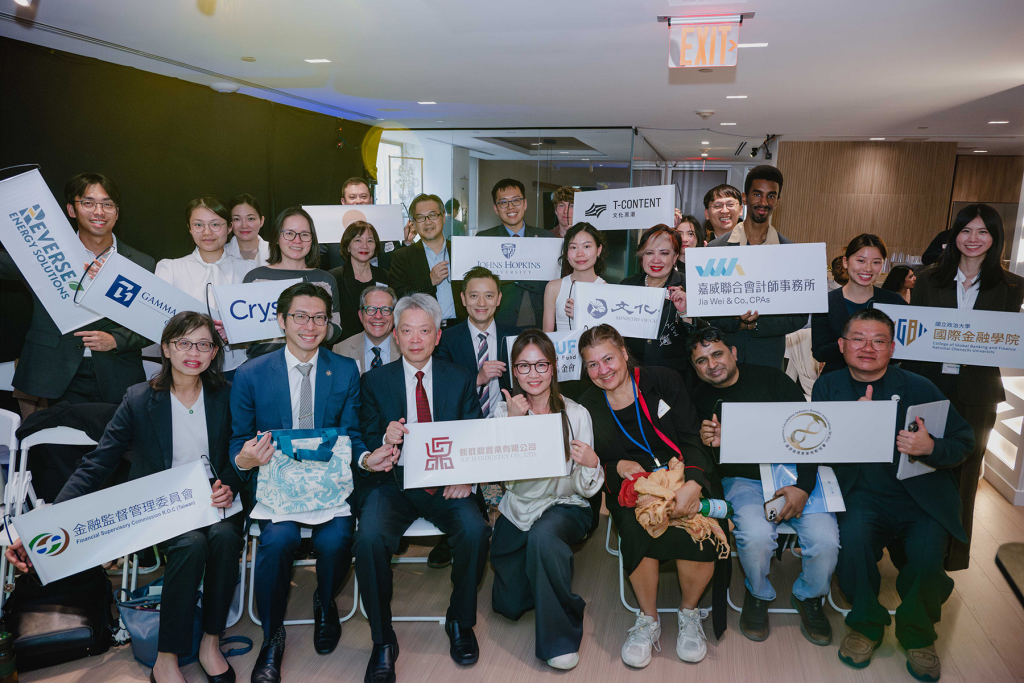
NEW YORK, NY (MERXWIRE) – STUF United Fund hosted the forum “Circular Economy & Green Finance — From Circular Materials to Climate Capital: Scaling Asia–U.S. Net-Zero Partnerships” on September 25 at its New York headquarters, bringing together leaders and experts from finance, industry, academia, and civil society to explore how sustainable innovation can attract capital, accelerate industrial applications, and strengthen Taiwan–U.S. cooperation toward net-zero goals. The forum opened with remarks by Ambassador Tom Chih-Chiang Lee of the Taipei Economic and Cultural Office in New York, followed by Peter C. L. Lin, Chairman of STUF United Fund Asia Pacific Center, who highlighted STUF’s commitment to advancing international exchange and cross-sector partnerships for sustainable development. Through the forum, STUF provided a platform for stakeholders across policy, finance, technology, and industry to exchange perspectives, identify shared priorities, and explore opportunities for future cooperation during New York Climate Week.
Green Finance: Mobilizing Capital for Climate Solutions
The first session focused on green finance and the role of capital in advancing climate solutions. Ying-Hsin Lee, Director of the Taiwan Financial Supervisory Commission’s New York Office, and Prof. David Audley, Professor of Financial Technology at Johns Hopkins University, shared perspectives on how financial systems and investment mechanisms can support sustainable innovation and industrial transformation. For many climate technologies and circular economy solutions, access to financing and strategic partnerships is essential at every stage—from research and development and technical validation to commercialization and large-scale deployment.
The discussion examined how promising climate solutions can secure the resources needed for growth while helping financial institutions and investors better understand their technological value, commercial potential, and real-world applications.
Circular Materials: Connecting Innovation, Industry, and Market Demand
The second session turned to circular materials, bringing together perspectives from technology, manufacturing, and renewable energy. Speakers included Lu Tung-Hsuan, Convener of the Industry–Academia Cooperation Committee of the Resource Circulation Promotion Association; Wu Hsiu-Fen, Chairwoman of S.C.D. Industrial Co., Ltd.; and Matthew Tsai, Investor Relations Representative of Global Renewable Energy Solutions (RES). The session explored topics ranging from material recovery and reuse to the integration of circular technologies into industrial processes and the development of viable, sustainable business models.
Participants emphasized that the long-term development of the circular economy depends not only on technological innovation, but also on its ability to respond to actual market needs. Through presentations and panel discussions, the forum connected financial and industrial perspectives, encouraging further dialogue on how capital, technology, market demand, and international partnerships can work together to accelerate sustainable transformation.
Building Connections Beyond the Forum
Following the formal sessions, participants continued their conversations during a networking reception, exchanging information about their ongoing projects and identifying potential areas for collaboration. STUF hopes that the relationships established in New York will serve as a foundation for future cross-border partnerships and lead to concrete initiatives connecting Taiwan, the United States, and the broader international community.
Art Meets Sustainability
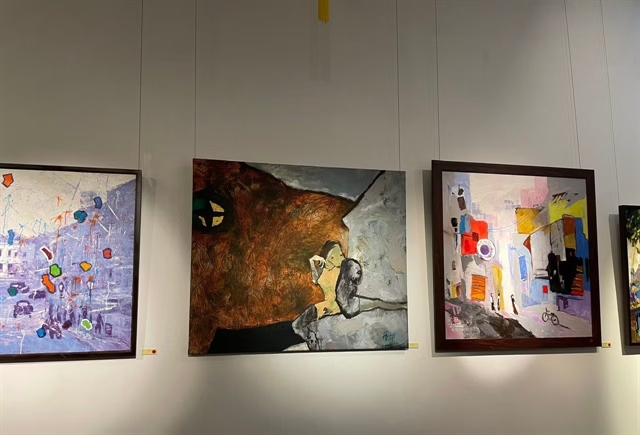
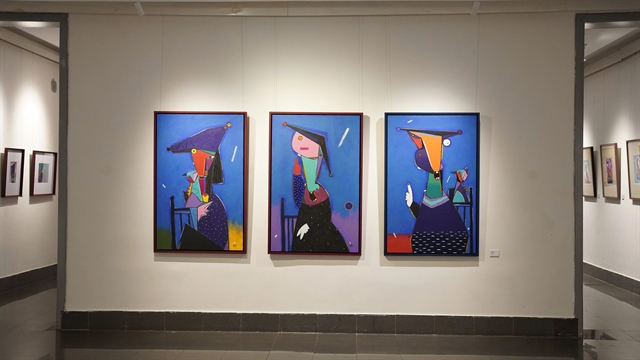
The forum also featured artworks by artist Yang Chung-Ming, adding an artistic dimension to the discussions on materials, sustainability, and the circular economy. By integrating art into the forum environment, participants were invited to consider materials from a different perspective and reflect on how creativity, reuse, and sustainability can intersect. The artworks complemented the forum’s broader themes and offered another way to engage with the possibilities of circularity beyond financial and industrial applications.
STUF United Fund will continue to connect partners from Taiwan and around the world and promote cross-sector engagement among finance, industry, academia, and civil society. Through international platforms such as New York Climate Week, STUF aims to turn dialogue into meaningful partnerships and translate shared commitments to sustainability into concrete collaborative action.
Media Contacts:
STUF United Fund Asia Pacific Center
Wan-Yu Huang
[email protected]
https://www.facebook.com/stufunitedfund
SOURCE: STUF United Fund Asia Pacific Center
More News
_2026_10_07_15_15_30.jpg)








Recommended
_2020_05_28_16_17_14.jpg)

Grow through play with Oatside Kids



YOUR NEWS, OUR NETWORK.
Do you have Great News you want to tell the world?
Be it updates about your business or your community, you can make sure that it’s heard by submitting your story to our network reaching hundreds of news sites across 6 verticals.