Standard Models vs. Custom Development: Sourcing from an OEM 360 Degree Swivel Stand Producer
Sep 29, 2026
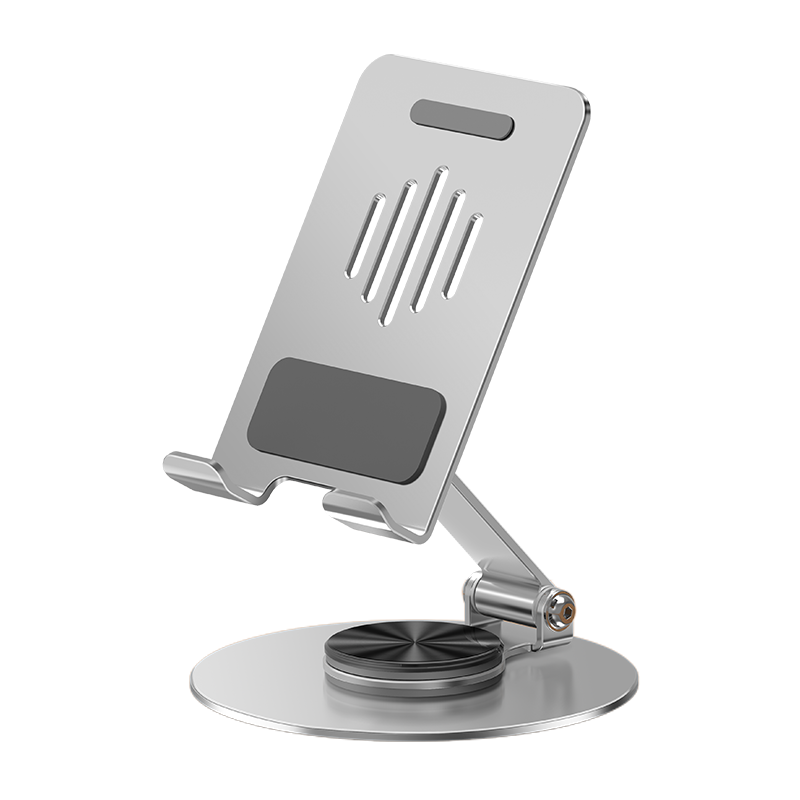
Shenzhen, Guangdong Sep 28, 2026 (Issuewire.com) - When consumer electronics brands, retail buyers, and sourcing specialists evaluate rotating metal stands, they face a strategic decision: source an off-the-shelf catalog design, adapt a proven factory model, or invest in proprietary custom tooling. Working with an OEM 360 degree swivel stand producer requires balancing upfront tooling investments, time-to-market targets, and product differentiation. Shenzhen Xinlu Hardware Products Co., Ltd. (operating as Xinlu) specializes in precision metal manufacturing, offering flexible engineering services that support standard wholesale supply, modular customization, and ground-up ODM development.
Selecting the right sourcing path determines not only initial capital outlay but also long-term product margins. Standard models minimize financial risk and get products to market quickly, while custom development creates exclusive market differentiation and tailored ergonomics. By comparing these three sourcing routes across tooling requirements, total cost of ownership, and intellectual property protection, procurement teams can make confident decisions that maximize commercial return.
Define Your Core Performance Needs First
Before reviewing factory catalogs or requesting quotes, procurement teams should clearly outline their non-negotiable performance criteria. A frequent sourcing mistake is browsing supplier catalogs superficially without confirming whether a model's mechanical tolerances match the actual operating environment.
Supported device dimensions and weights are the natural starting point. Sourcing teams must establish whether the rotating stand will support smartphones, heavy tablets, or large mobile workstations. A mechanism engineered as a compact 360 phone holder uses a smaller pivot bearing diameter and lighter rotational friction than a heavy-duty 360 laptop stand designed to support up to 5 kilograms while maintaining screen stability.
Next, buyers should define the exact rotational feel required. Does the product need continuous, fluid 360-degree rotation, or should it feature mechanical detent clicks for tactile feedback at set angles? Should rotation operate independently from tilt and height adjustments, or integrate into an articulated folding arm? Documenting these physical requirements establishes clear criteria for evaluating off-the-shelf versus custom options.
Daily usage intensity also dictates bearing selection. A stand designed for occasional home-office viewing experiences far less wear than a commercial point-of-sale display rotated hundreds of times each day. Specifying expected daily rotation cycles ensures the internal bearing and washer assembly will deliver long-term durability without loosening over time.
Compare Three Sourcing Routes: Catalog, Modded, or Custom
Understanding the practical trade-offs between standard sourcing, modular adaptation, and ground-up development helps brands balance commercial speed against proprietary design.
An Existing Model That Meets the Brief
Sourcing an existing factory model offers the fastest, lowest-risk path to market. When an established swivel laptop stand or phone mount already meets the brand's functional, aesthetic, and dimensional criteria, the procurement process is simple. Zero tooling or stamping die investment is needed, as the factory uses existing production molds and assembly fixtures. Samples are typically available from stock, and mass production can start within standard material lead times. Customization is focused on exterior branding--such as laser-etched or silk-screened logos--alongside standard anodized colorways and custom retail packaging graphics. This route is ideal for e-commerce sellers needing rapid market entry, corporate gifting programs, or distributors expanding their catalog without R&D overhead.
An Adaptation That Closes a Specific Gap
When an existing factory model is mechanically sound but lacks a specific feature required by the buyer, modular adaptation provides an efficient middle ground. For example, a customer might adopt a factory's proven 360-degree rotating base mechanism but request a modified cradle plate to support proprietary phone cases or custom silicone contact pads. Tooling investment is limited to modified stamping dies or custom silicone injection molds, avoiding the expense of re-engineering the base assembly. Factory engineers verify that the modifications maintain the stand's center of gravity, hinge torque, and rotational balance. Prototyping and testing are substantially faster than full custom development, typically requiring only pilot tool validation before volume production. This approach suits established brands seeking distinctive styling or improved device fit while leveraging field-tested rotational mechanics.
Ground-Up Custom Development for Unique Designs
When a brand needs a novel mechanical architecture, distinctive industrial design, or proprietary features, full custom development becomes the right choice. Partnering with Xinlu for custom ODM development allows buyers to engineer a proprietary 360-degree rotating stand from early concept sketches. The brand controls every mechanical dimension, hinge resistance profile, alloy grade, and aesthetic contour, creating an exclusive product competitors cannot duplicate. The buyer funds dedicated extrusion dies, stamping tools, progressive molds, and assembly fixtures. The project moves through iterative prototyping, stress analysis, cycle endurance testing, and packaging drop tests before tooling freeze. Custom development is best suited for category leaders launching flagship product lines, specialized equipment makers requiring exact device integration, and brands with volume distribution capable of amortizing tooling investments over large production runs.
Evaluate Total Sourcing Costs Beyond the Unit Price
Procurement teams should evaluate the total cost of ownership across the product lifecycle rather than focusing solely on the quoted ex-factory unit price. An attractively low piece price on a custom project can quickly be erased by high tooling amortization, development delays, or production scrap.
Tooling and NRE Costs vs. Unit Production Costs
A thorough quotation analysis separates Non-Recurring Engineering (NRE) charges from recurring manufacturing costs. Upfront NRE expenses cover 3D CAD engineering, CNC sample machining, pilot tooling fabrication, testing fixtures, and structural packaging design. Recurring costs include aluminum extrusion billets, CNC machining cycles, surface anodizing, assembly labor, packaging materials, and freight. For standard models, NRE costs are essentially zero, making smaller opening orders economically viable. For custom development, NRE investments must be amortized across projected lifetime order volumes. If forecasted annual volumes are modest, the effective per-unit cost of a custom program may exceed that of an adapted standard model.
Tooling Ownership, IP Protection, and Design Changes
Clear commercial agreements should define intellectual property ownership and tooling rights with complete clarity. When a brand funds dedicated custom tooling, the agreement should ensure exclusive ownership of all custom dies, molds, and aesthetic designs, ensuring the factory cannot supply identical hardware to other buyers. For standard or adapted catalog models, the core tooling remains factory property. Buyers should also confirm how engineering revisions are managed, ensuring the factory will not alter critical dimensions, bearing materials, or surface finishes without prior written confirmation.
Request Quotes Against a Standardized Project Scope
To evaluate supplier proposals fairly, procurement teams must benchmark quotes against an identical project scope. Comparing an all-inclusive custom development proposal against a bare-bones standard model quote produces misleading financial comparisons.
A comprehensive RFQ brief should clearly specify supported device dimensions, weight ratings, and functional rotation requirements. State the desired sourcing route--whether standard catalog selection, modular adaptation, or full custom development. Include target batch quantities, annual volume estimates, and delivery timelines. Finally, outline retail packaging needs, inspection AQL thresholds, regulatory compliance requirements, tooling ownership terms, and required prototyping milestones.
Shenzhen Xinlu Hardware Products Co., Ltd. provides transparent pricing, expert engineering guidance, and dependable production timelines across all three sourcing models. Whether you need immediate delivery of field-proven stands or a dedicated ODM engineering partnership, sourcing teams can connect with Xinlu directly or visit their official Alibaba supply channel to compare quotation schedules across catalog supply, modular adaptation, and custom manufacturing programs.
Media Contact
Shenzhen Xinlu Hardware Products Co., Ltd.
Source :Shenzhen Xinlu Hardware Products Co., Ltd.
This article was originally published by IssueWire. Read the original article here.
More News

_2026_10_14_09_29_20.jpg)









Recommended


Behind every great meal is an engaged team
_2026_07_21_13_41_54.jpg)
'58th' is coming to cinemas in Taiwan soon

Finding the rhythm of a place


When did I stop listening to OPM?

YOUR NEWS, OUR NETWORK.
Do you have Great News you want to tell the world?
Be it updates about your business or your community, you can make sure that it’s heard by submitting your story to our network reaching hundreds of news sites across 6 verticals.