Global Leading Regenerable PFAS Resin Exporter: Why Regeneration Changes Long-Term Treatment Costs
Sep 29, 2026
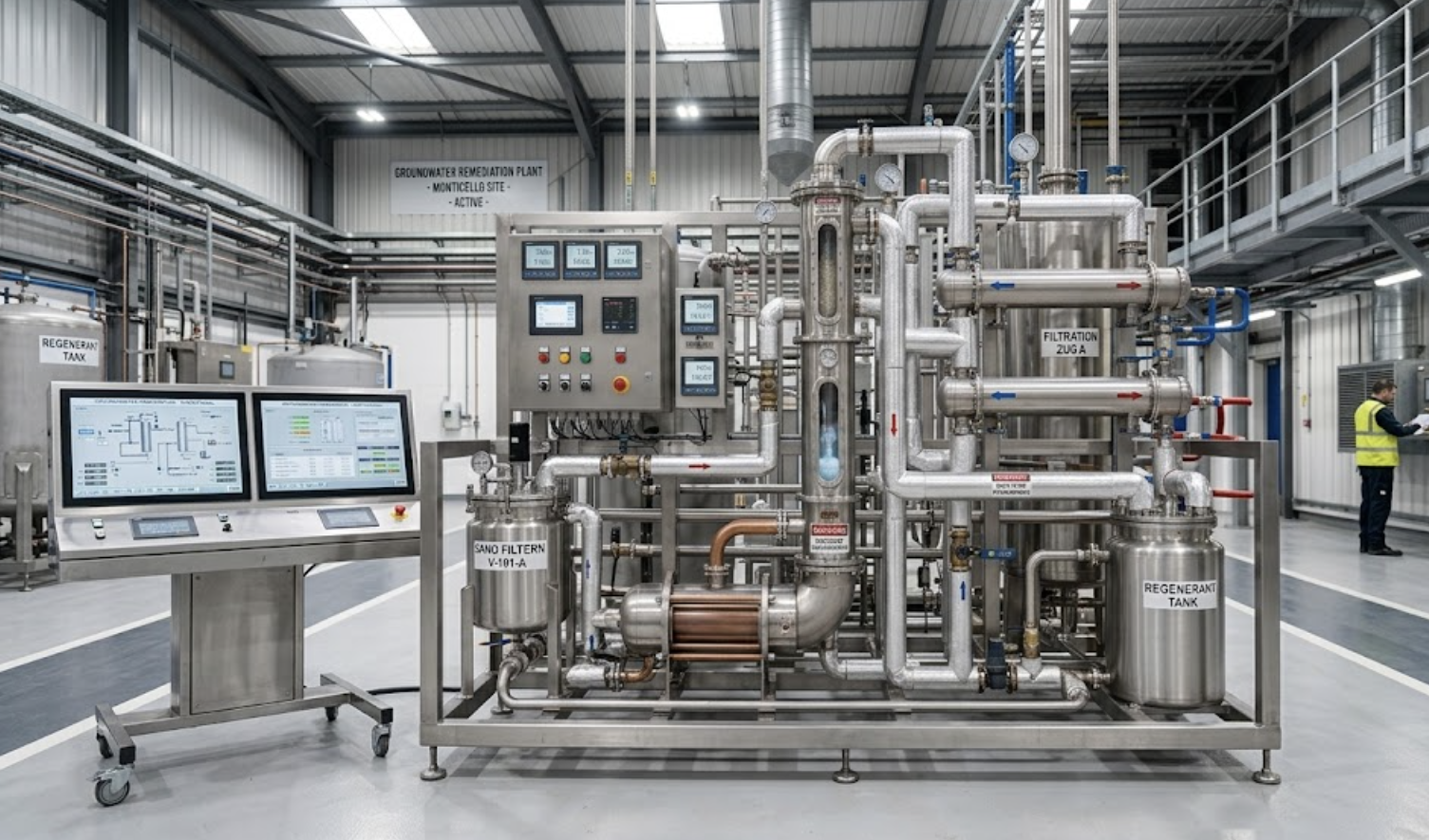
Xian, Shaanxi Sep 28, 2026 (Issuewire.com) - Water treatment providers worldwide face an unprecedented regulatory shift as environmental agencies establish stringent thresholds for per- and polyfluoroalkyl substances (PFAS). Strict drinking water standards now compel municipal and industrial plant operators to eliminate trace contaminants down to low single-digit parts-per-trillion levels. Consequently, utility directors must re-examine their long-term capital allocation and recurring operational budget strategies. Historically, treatment facilities relied almost exclusively on single-use adsorbents, such as granular activated carbon (GAC), to satisfy basic compliance mandates. However, rapid media saturation, frequent media replacement, and escalating hazardous waste disposal tariffs create severe financial volatility for operating authorities. As public and private entities evaluate sustainable remediation frameworks, a Global Leading Regenerable PFAS Resin Exporter (https://www.seplite.com/pfas-removal/) provides advanced engineered separation media that fundamentally transform treatment economics. Instead of viewing media procurement as a continuous consumable expense, modern facilities now analyze treatment infrastructure through a comprehensive multi-year financial framework. This strategic evolution prioritizes overall operational efficiency and overall lifecycle performance over the initial purchase price per ton of fresh media. Deconstructing the TCO Model: Disposable Carbon vs. Regenerable Ion Exchange Evaluating treatment media economics requires a complete Total Cost of Ownership (TCO) calculation rather than a simple upfront capital expenditure comparison. Granular activated carbon features lower initial purchase costs per unit volume. Nevertheless, carbon beds saturate rapidly when treating complex raw water streams that contain elevated total organic carbon or competing background anions. Frequently changing out exhausted carbon incurs heavy operational fees, including specialized labor, bulk media transport, and expensive hazardous thermal reactivation. In contrast, synthetic ion exchange resins demonstrate superior adsorption kinetics and higher target contaminant selectivity. Specialized strong base anion exchange resin (SBA) (https://www.seplite.com/strong-base-anion-exchange-resin-sba/) formulations offer six to eight times the operational capacity of conventional carbon media under identical water conditions. Furthermore, high-velocity operational flow rates ranging from 20 to 40 bed volumes per hour substantially diminish vessel footprint requirements. Smaller vessel footprints lower initial civil engineering and site construction expenses significantly. Most importantly, traditional disposable media struggle to capture mobile short-chain compounds such as PFBA and PFBS efficiently. These short-chain molecules break through standard carbon beds prematurely, forcing water plants into unbudgeted changeouts. Regenerable resin architectures maintain exceptionally strong chemical affinity for both short-chain and long-chain molecules, preventing early breakthrough while lowering cumulative operational expenditures over time. The Science of Regeneration: How SEPLITE® Technology Rewrites Resin Lifespan The economic advantage of advanced ion exchange media relies heavily on controlled chemical desorption dynamics. Media longevity depends directly upon bead mechanical strength, osmotic shock tolerance, and reversible kinetic design. Standard single-use media incinerate alongside captured contaminants after reaching total exhaustion. Conversely, regenerable ion exchange technology empowers facility operators to restore functional active sites repeatedly without destroying the polymer matrix backbone. Pioneered by Sunresin (Sunresin New Materials Co. Ltd.) (https://www.seplite.com/sunresin-profile/), the SEPLITE® LSI 106G resin series utilizes specialized quaternary ammonium functional groups attached to a highly crosslinked macroporous polymer structure. This engineered matrix creates a powerful dual removal mechanism utilizing strong electrostatic attraction and hydrophobic interactions. During the scheduled regeneration cycle, an optimized brine and solvent eluent solution strips bound contaminants cleanly from functional active sites. The process restores original operating capacity while minimizing liquid secondary waste volumes. Because the resin beads maintain a whole-bead count exceeding 93 percent, the material withstands intense mechanical attrition, physical friction, and thermal shock across multiple operating cycles. Consequently, plant managers extend functional media lifespan from a few short months to several years, effectively flattening the long-term operational expenditure curve. Beyond Media Supply: Sunresin's Turnkey EPC & System Integration Advantage Achieving reliable cost reduction requires integrated engineering expertise alongside high-performance material manufacturing. Media performance demonstrated in laboratory pilot trials does not automatically guarantee commercial success without precise process integration. Therefore, Sunresin supports global projects through a comprehensive model combining high-purity material supply with custom Engineering, Procurement, and Construction (EPC) delivery capabilities. With an annual resin manufacturing capacity exceeding 50,000 cubic meters, Sunresin New Materials Co. Ltd. enforces rigorous quality control standards across all automated production facilities. Over 300 dedicated technical specialists lead the company's research and development divisions, ensuring that every production batch meets international ISO compliance standards. Furthermore, specialized system integration teams design modular skid-mounted units and continuous ion exchange systems equipped with automated solvent recovery units. These closed-loop systems execute eluent distillation and concentrate secondary waste streams with maximum efficiency. By controlling the complete industrial value chain--from initial polymer synthesis to final plant commissioning--operators minimize technical integration risks while maintaining consistent non-detect effluent quality. Field Evidence: Real-World Economic Impact & Short-Chain Removal Field data compiled from commercial groundwater remediation sites confirms the theoretical financial advantages of regenerable ion exchange systems. In high-flow industrial and municipal remediation applications, traditional single-use carbon beds required complete media replacement every three to six months due to rapid short-chain PFAS breakthrough. These repetitive maintenance cycles led to unexpected operational downtime, heavy labor demands, and substantial hazardous waste management expenses. After retrofitting facilities with SEPLITE® regenerable resin systems, operators achieved continuous regulatory compliance well below target analytical detection limits. Crucially, multi-year financial tracking reveals total cost of ownership reductions between 30 and 50 percent compared to conventional single-use media installations. Although initial equipment procurement and specialized resin media require a higher upfront capital investment, the system amortizes these costs rapidly. Extended resin lifecycle operations, combined with efficient onsite eluent regeneration, drastically decrease ongoing media replacement expenditures. This empirical operational performance validates regenerable resin technology as an economically superior option for challenging contamination profiles. Conclusion & Strategic Partnership: Future-Proofing Water Infrastructure As global environmental regulations become increasingly stringent, water utility managers and industrial plant owners must transition away from linear, disposable remediation strategies. Relying continuously on single-use adsorbents exposes treatment facilities to escalating hazardous waste disposal tariffs and unpredictable media supply chain disruptions. In contrast, adopting a circular treatment strategy centered on regenerable resin technology delivers long-term financial stability and continuous regulatory compliance. Partnering with an experienced global manufacturer enables facility operators to future-proof their water treatment infrastructure effectively. Advanced polymer chemistry, robust system engineering, and comprehensive lifecycle technical support form the foundation of sustainable modern water stewardship. Detailed pilot testing, total cost of ownership audits, and custom system engineering consultations provide plant directors with a clear path toward long-term operational cost reduction. Discover comprehensive separation technologies and engineering capabilities by visiting https://www.seplite.com/.
Source :Sunresin New Materials Co. Ltd.
This article was originally published by IssueWire. Read the original article here.
More News

_2026_10_14_09_29_20.jpg)










Recommended


Behind every great meal is an engaged team
_2026_07_21_13_41_54.jpg)
'58th' is coming to cinemas in Taiwan soon

Finding the rhythm of a place


When did I stop listening to OPM?




YOUR NEWS, OUR NETWORK.
Do you have Great News you want to tell the world?
Be it updates about your business or your community, you can make sure that it’s heard by submitting your story to our network reaching hundreds of news sites across 6 verticals.