Fast Moving Consumer Goods Market Analysis, Regions, Companies, Price, Investment Opportunities, Product and Forecast Study 2025

Nov 15, 2018

Global Fast Moving Consumer Goods Market report describes qualitative analysis of industry highlighting opportunities, and supporting strategic and skillful decision-making, by Deep Research Reports

Pune, India - November 15, 2018 /MarketersMedia/ —

In 2017, the global Fast Moving Consumer Goods (FMCG) market size was million US$ and is forecast to million US in 2025, growing at a CAGR of from 2018. The objectives of this study are to define, segment, and project the size of the Fast Moving Consumer Goods (FMCG) market based on company, product type, application and key regions.

Complete Report on ‘Global Fast Moving Consumer Goods Industry 2018 Market Research Report’ spread across 121 pages, profiling 18 companies and supported with tables and figures @ https://www.deepresearchreports.com/contacts/inquiry.php?name=897424

#Key Manufacturers Analysis of Fast Moving Consumer Goods Market:- Pepsi, Kraft, Coca-Cola, Carlsberg Group, Diageo, Nestl SA, SAB Miller, Heineken NV, AB InBev, Dr. Pepper Snapple Group, Kellogg, Link Snacks, Frito-Lay, Cape Cod,Utz Quality Foods,Accolade Wines, Heineken and Carlsberg.

This report studies the global market size of Fast Moving Consumer Goods Market (FMCG) in key regions like North America, Europe, Asia Pacific, Central & South America and Middle East & Africa, focuses on the consumption of Fast Moving Consumer Goods (FMCG) in these regions.

This research report categorizes the global Fast Moving Consumer Goods (FMCG) market by players/brands, region, type and application. This report also studies the global market status, competition landscape, market share, growth rate, future trends, market drivers, opportunities and challenges, sales channels, distributors and Porter's Five Forces Analysis.

Market Size Split by Type
- Snacks
- Drinks
- Other
Market Size Split by Application
- Household Use
- Commercial Use (Restaurant, Hotel, Bar, etc.)
- Other

#Purchase a copy of report "2025 Market Insights, Forecast Report on Global Fast Moving Consumer Goods (FMCG) Industry" @ https://www.deepresearchreports.com/contacts/purchase.php?name=897424

This report includes the estimation of market size for value (million US$) and volume (K Units). Both top-down and bottom-up approaches have been used to estimate and validate the market size of Fast Moving Consumer Goods (FMCG) market, to estimate the size of various other dependent submarkets in the overall market. Key players in the market have been identified through secondary research, and their market shares have been determined through primary and secondary research. All percentage shares, splits, and breakdowns have been determined using secondary sources and verified primary sources.

Major points from Table of Contents for Global Fast Moving Consumer Goods Industry 2018 Market Research Report include:
1 Fast Moving Consumer Goods Market Overview
2 Global Fast Moving Consumer Goods Market Competition by Manufacturers
3 Global Fast Moving Consumer Goods Capacity, Production, Revenue (Value) by Region (2018-2015)
4 Global Fast Moving Consumer Goods Supply (Production), Consumption, Export, Import by Region (2013-2018)
5 Global Fast Moving Consumer Goods Production, Revenue (Value), Price Trend by Type
6 Global Fast Moving Consumer Goods Market Analysis by Application
7 Global Fast Moving Consumer Goods Manufacturers Profiles/Analysis
8 Fast Moving Consumer Goods Manufacturing Cost Analysis
9 Industrial Chain, Sourcing Strategy and Downstream Buyers
10 Marketing Strategy Analysis, Distributors/Traders
11 Market Effect Factors Analysis
12 Global Fast Moving Consumer Goods Market Forecast (2018-2025)
13 Research Findings and Conclusion
14 Appendix
Methodology
Analyst Introduction
Data Source

Inquire more about the report "Global Fast Moving Consumer Goods Industry 2018 Market Research" @ https://www.deepresearchreports.com/contacts/inquire-before-buy.php?name=897424

About Us:
Deep Research Reports are a digital database of syndicated market reports for global and China industries. These reports offer competitive intelligence data for companies in varied market segments and for decision makers at multiple levels in these organizations.We provide 24/7 online and offline support to our customers.

Contact Info:
Name: Hrishikesh Patwardhan
Email: Send Email
Organization: Deep Research Reports
Address: Tower B5, office 101, Magarpatta SEZ, Hadapsar, Pune-411013, India
Phone: + 1 888 391 5441

Source URL: https://marketersmedia.com/fast-moving-consumer-goods-market-analysis-regions-companies-price-investment-opportunities-product-and-forecast-study-2025/444224

For more information, please visit http://www.deepresearchreports.com

Source: MarketersMedia

Release ID: 444224

More News

What to consider if a company that made AI-related job cuts wants you back

Oct 30, 2026

What to consider if a company that made AI-related job cuts wants you back

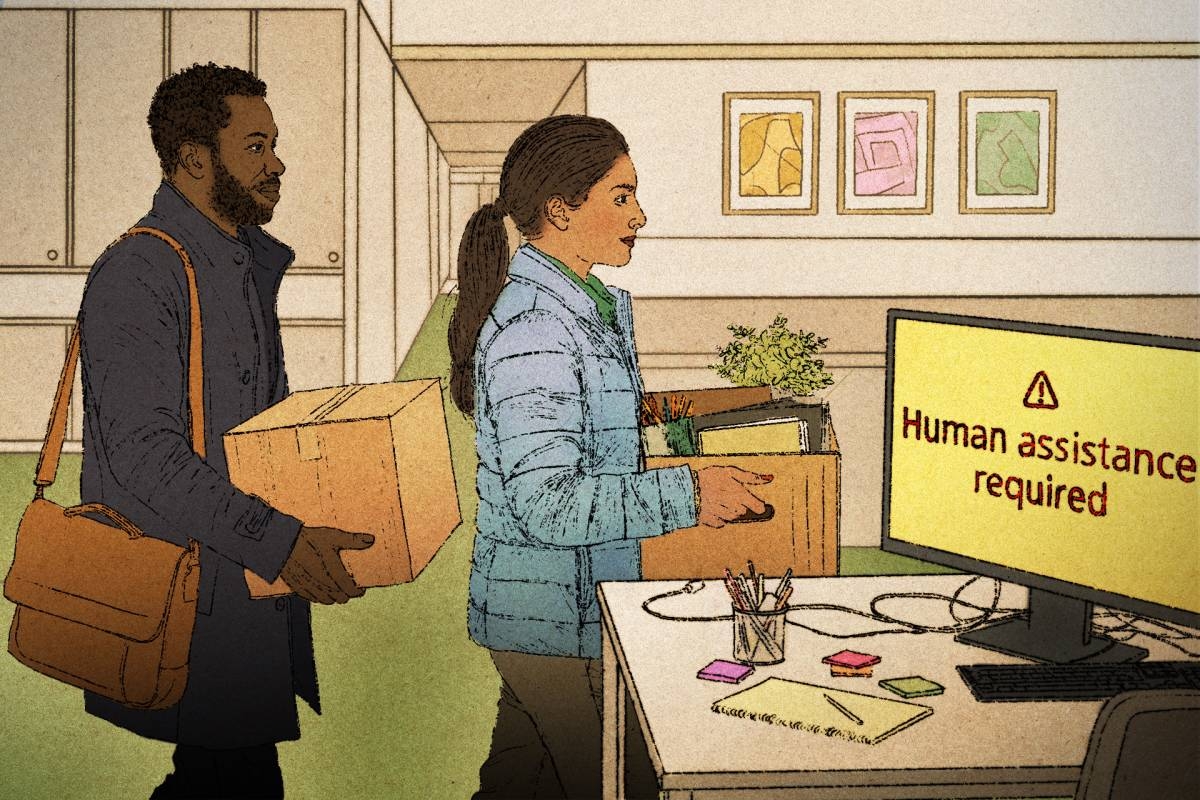
NEW YORK — Companies around the world are increasingly citing artificial intelligence when slashing jobs, fueling anxiety that a lot more workers may lose their livelihoods to machines. Microsoft, Barclays Bank and supermarket chain Kroger are among the latest entries on a growing list of companies that have announced AI-related workforce reductions this year, including the elimination of jobs deemed redundant or shed to free up money for investing in the technology. But the job cuts of the AI era, which are affecting tens of thousands of people, occasionally have an epilogue. Some companies, after discovering that AI models, applications and agents don't perform as well as expected, end up rehiring laid-off workers to fill eliminated positions. It's unclear how common such reversals are, but they are happening often enough to acquire a nickname: the "AI boomerang." "Two years ago, we said, 'Would this happen?' and now we're saying, 'Yes, it is happening in real time,'" said Lucy Beaumont, a global senior vice president at SHL, a U.K.-based technology company that develops employment-related tests and tools. Hiring managers in fields including finance, marketing, law and health reported earlier this year that their companies had eliminated positions primarily because of AI or automation, only to hire again for the same or similar roles, according to recruitment and staffing firm Robert Half. The most frequently cited reasons for restoring dropped jobs included the technology needing more human oversight than anticipated and its inability to replicate institutional knowledge, the firm said. "When you need critical thinking, collaboration, creativity, institutional knowledge, those are things that AI just can't replicate," Bill Driscoll, a senior district president at Robert Half, said. "And I think that's where companies are starting to realize, 'Wow, we really do need people to do these jobs.'" Klarna, the Swedish provider of buy now, pay later services, began recruiting human customer service representatives again last year. CEO Sebastian Siemiatkowski acknowledged in an interview with Bloomberg News that the company's reliance on an AI chatbot to cut costs had gone too far. In June, Ford said it had hired or promoted 350 veteran engineers after AI tools the automaker deployed to do quality control work did not perform at the expected level. "AI utilization has been an important part of our quality gains and that — along with deep technical expertise of our teams — is a powerful combination," a Ford spokesperson told The Associated Press. However, companies don't always broadcast their U-turns on shifting resources or responsibilities from employees to AI systems, Beaumont said. "Maybe their shareholders love that they did this right-sizing motion... and then they have to turn around and quietly, with their tail between their legs, admit that they weren't ready for that or they shouldn't have done that," she said. Management experts offered employment advice for workers as companies make greater use of AI tools and consider — or reconsider — their staffing needs while assessing the technology's capabilities. Rehiring suggests the invisible work of humans is not easily replaced When companies use AI to perform tasks previously done by people, they often miss the invisible work employees do beyond their formal job descriptions, said Betsy Summers, a principal analyst on the Future of Work team at market research and advisory firm Forrester. That might include sensing emotions and moods, holding impromptu meetings and putting in extra effort when feeling inspired or otherwise motivated, Summers said. "We don't know all the work that's required to do things well within the organization," she said. "The citizenship behaviors of team cohesion and team building and making sure that you have trust within your team, none of that is accounted for. So when you rip out humans who are doing that work and then expect agents to be able to then deliver exactly what humans have delivered, they are frequently mistaken." Another factor that complicates assigning more work to AI-powered tools is that company procedures for tasks such as data processing and bookkeeping are not always well documented, experts said. "Organizations are not spending enough time doing the up-front work to really truly understand workflows and where humans add value in the process," said Brooks Holtom, a professor of management at Georgetown University's McDonough School of Business. In roles such as customer service, AI agents and chatbots frequently need to refer questions and complaints to a worker who can recognize emotions, assess the severity or complexity of a problem and respond creatively within established policies, Holtom said. "It's that combination of creativity but staying in the guardrail that's really hard for a machine to figure out," he said. Figure out what gives you a competitive edge as a human As companies redirect resources toward AI, current employees and those asked to come back might want to emphasize skills that complement the technology, such as emotional intelligence and sound judgment, Holtom said. "Really try to be able to articulate, what's your value proposition as a human?" Holtom said. "Don't be afraid to lean into the technology as well, and understand how to differentiate yourself from what machines do well. Embrace that, understand that, and you can become uniquely qualified to help with implementation." Empathy is a human quality that technology has not fully mastered, Beaumont said. "Think about an angry customer. They want to be listened to, they want to be heard, they really want a human on the other end of the line," Beaumont said. "Can an AI replace that right now in a way that feels meaningful to individuals? Perhaps not." Know your leverage and use caution if you're asked back Many people are understandably reluctant to return to a company that laid them off as part of a reorganization around artificial intelligence, according to Beaumont. "To come back to a business where you've been let go, replaced by AI, to be asked back to that business, your trust is gone, your psychological safety there, your relationship with the employer, and that's very, very difficult to build back," she said. Workers offered their old jobs back are asking for more money and to know how AI might impact future staffing, Beaumont said. Requesting additional training and a clear explanation of your opportunities for advancement could be part of the discussion, she said. Communicate ways you would contribute value as a returning employee, outlining a new job description "that leverages the technology but also your expertise," Holtom said. You could end up in a higher-ranking position that pays more than the one you left, he said. Before accepting an offer, seek a commitment such as a one-year renewable contract that includes a buyout clause if the job is terminated in less than a year, Holtom suggested. Don't discount the distinctly human values of motivation and curiosity, which make people efficient and effective, Summers said. "Within our societies, work serves a broader purpose than just creating value for shareholders or customers or constituents," she added. "Work serves a human purpose as well. It's the manifestation of our search for meaning and purpose. We want to contribute to our communities as human beings."

YOUR NEWS, OUR NETWORK.

Do you have Great News you want to tell the world?

Be it updates about your business or your community, you can make sure that it’s heard by submitting your story to our network reaching hundreds of news sites across 6 verticals.