Established Sanitary Ware OEM/ODM Programs: How Kadelg Connects Customization and Multi-Category Bathroom Supply
Sep 29, 2026
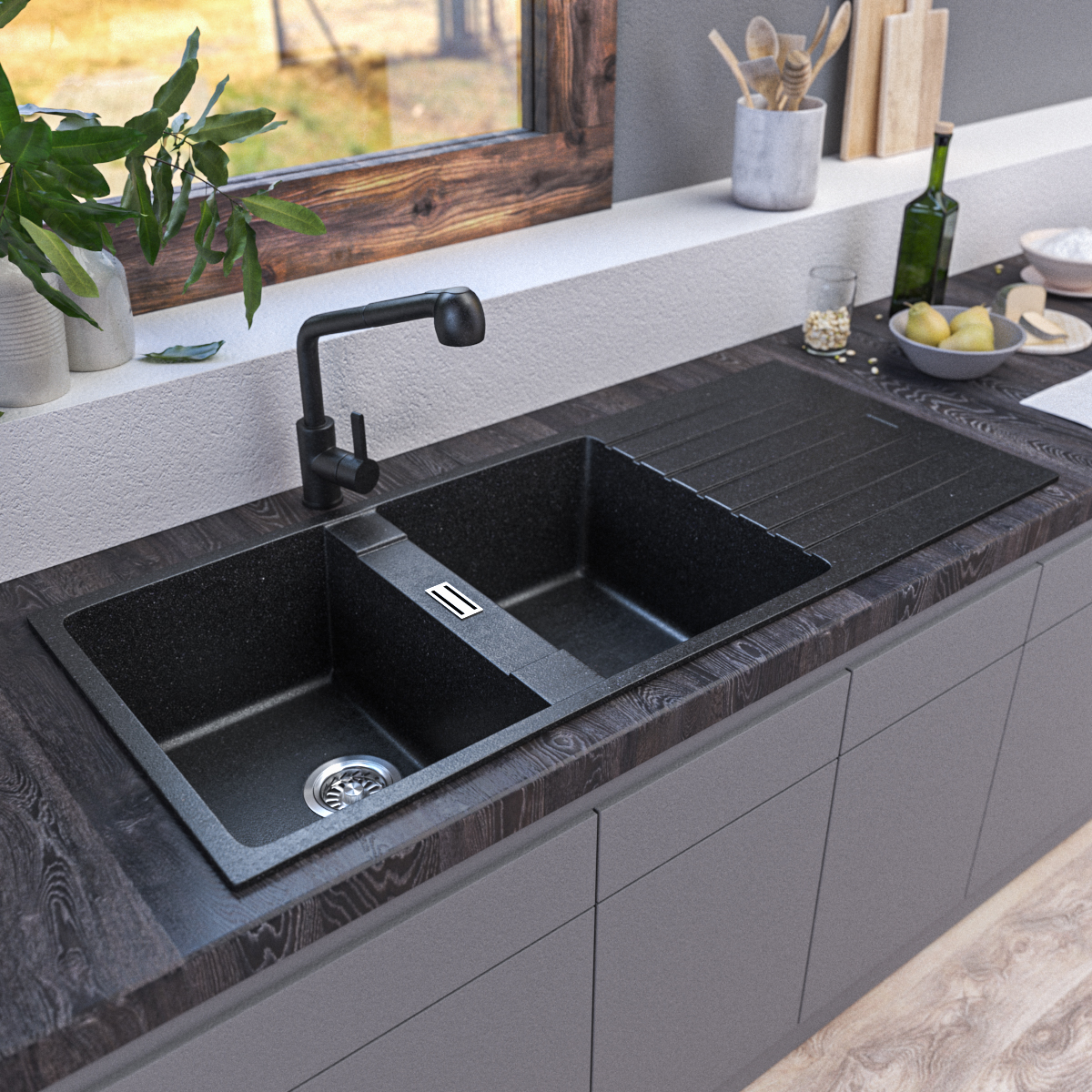
Chaozhou, Guangdong Sep 29, 2026 (Issuewire.com) - In international plumbing distribution, private-label brands and regional importers need manufacturing partners that deliver specific product modifications while maintaining dependable production schedules. Established sanitary ware OEM and ODM programs provide the engineering structure required to turn proprietary brand concepts into volume production runs without compromising product consistency or factory throughput.
When selecting export sanitaryware, overseas buyers examine how ceramic factories manage custom development alongside standard volume manufacturing. Guangdong Zhongtao Technology Co., Ltd., founded in Chaozhou in 1998, operates high-capacity sanitaryware facilities under its Kadelg brand. By coordinating technical product development across ceramic and composite production lines, the manufacturer helps overseas partners launch cohesive bathroom collections that satisfy regional plumbing codes and wholesale distribution requirements.
Starting with Technical Specifications
A successful private-label program begins with a complete functional specification rather than surface-level brand application. Sourcing teams sometimes select existing catalog items and simply request custom packaging or laser-etched brand logos. While this approach allows fast market entry, it leaves the distributor exposed to direct price competition from identical generic products sold across competing retail channels. Without proprietary technical differences, competitors can easily source the same basic casting from competing trading houses.
Detailed OEM specifications define exact dimensional tolerances, material formulations, hydraulic performance targets, and installation connections. Sourcing managers establish ceramic body density standards, water absorption limits below 0.5% for vitreous china, glaze thickness between 0.8 mm and 1.2 mm, and critical rough-in dimensions. Defining these technical parameters before tooling begins allows brand owners to build distinct product lines that protect commercial margins and minimize jobsite warranty disputes.
A functional program brief specifies spatial and visual relationships between adjacent bathroom fixtures. It defines matching corner radii between washbasins and toilet bowls, coordinates ceramic glaze reflectance values under standard showroom lighting, and aligns mounting hardware across different product types. This engineering discipline ensures that individual fixtures function as an integrated suite across residential developments, hotels, and commercial buildings rather than looking like an arbitrary assembly of mismatched items.
Distinguishing Standard Catalog Items from Development RequestsStandard Catalog Customization Options
Private-label procurement follows three distinct manufacturing paths: standard catalog selection, platform modification, and complete custom development. Each path carries different requirements for capital expenditure, tooling lead times, and minimum order quantities. Importers need to categorize their product requirements accurately to set practical development budgets, manage container lead times, and establish milestone schedules.
Custom Tooling and Exclusive Mold Development
Catalog selection provides the most direct procurement route, using existing factory designs with proven molds and established production yields. This path minimizes upfront investment, avoids tooling development delays, and allows rapid replenishment for standard wholesale inventories. Sourcing teams select tested models that already carry relevant market approvals, making catalog selection ideal for volume price-point programs.
Platform modification adapts existing vitreous china bodies by adjusting tap hole configurations, modifying glaze colors, altering mounting hole centers, or changing trapway rough-in dimensions. Complete custom development requires commissioning dedicated plaster block models, resin case molds, and high-pressure casting dies for entirely proprietary fixture geometries. Custom tooling requires longer development timelines, typically requiring six to ten weeks for mold development and initial kiln firing trials.
Clarifying these project requirements during initial commercial discussions prevents scope creep and unrealistic production expectations. Sourcing teams assess whether projected sales volumes justify the tooling amortization, sample revision cycles, and extended prototyping phases associated with bespoke product development before signing manufacturing agreements.
Structured Approval Stages for Development ProgramsEngineering Drawing Sign-Off and Prototype Mold Tooling
Disciplined project governance uses clear approval checkpoints to verify technical and commercial requirements before moving to the next development phase. Kadelg uses a structured milestone framework to guide OEM programs from concept review to mass production:
Physical Pre-Production Testing and Packaging Validation
- Program specification: confirming functional dimensions, rough-in centerlines, water inlet locations, and waste outlet geometries against regional plumbing codes.
- Prototype and off-tool sample evaluation: inspecting physical castings, measuring kiln shrinkage rates, evaluating glaze uniformity, and checking mounting deck flatness.
- Dimensional and hydraulic verification: testing flush volume accuracy, trapway siphonage velocity, bulk waste evacuation, and static load limits up to 400 kilograms.
- Packaging and documentation sign-off: approving drop-tested export cartons, molded protective inserts, barcode labeling, and multilingual installation instructions.
- Production release and quality benchmarks: establishing acceptable quality limits (AQL) and baseline reference samples for ongoing batch inspection.
Pilot Production Runs and Quality Control Milestones
During initial specification sign-off, engineering teams approve comprehensive 2D production drawings and 3D CAD models. This stage resolves critical functional interfaces, such as waste outlet centerlines, water inlet positions, and structural mounting points, before physical mold production commences. Catching interface errors in CAD models prevents costly mold alterations and delays later in the tooling schedule.
Final packaging and documentation approvals verify that drop-tested cartons, multilingual installation manuals, and barcode labeling comply with regional retail logistics standards. Packaging engineers design internal EPS or honeycomb cushioning to protect delicate ceramic edges during maritime container transit, rail transport, and pallet handling. Production release occurs only after first-article inspection confirms compliance with all agreed engineering specifications.
Quality assurance protocols also include structural load testing and mechanical endurance verification. Ceramic bowls undergo static load testing up to 400 kilograms to confirm body strength and wall integrity. Simultaneously, flush valves and mounting components are tested through thousands of operating cycles to guarantee durability in high-traffic commercial washrooms.
Coordinating Product Categories Across Technical Standards
While an OEM bathroom collection presents a unified design language to retail consumers, each product category relies on different manufacturing materials and testing standards. Sourcing teams maintain separate technical files for vitreous china ceramics, fine fireclay basins, acrylic shower trays, and composite kitchen sinks. Each material requires distinct testing procedures for stain resistance, thermal shock, and impact strength.
Vitreous china toilets undergo volumetric shrinkage of approximately 11% to 13% during high-temperature tunnel kiln firing at 1280°C. In contrast, composite quartz and granite sinks are formed through thermoset polymer casting with minimal dimensional shrinkage. Applying uniform dimensional tolerances across these disparate material classes creates unworkable manufacturing specifications, so engineers define material-specific tolerances and inspection criteria for each product category.
Establishing Ownership and Supply Responsibilities in Writing
Commercial agreements for custom sanitaryware programs must define intellectual property rights, mold maintenance obligations, and production exclusivity terms. When buyers fund dedicated tooling for proprietary designs, the supply agreement must protect exclusive ownership. Contracts should explicitly restrict factories from supplying identical castings to competing distributors in the same market.
Agreements also define minimum production runs, warranty claim procedures, and spare parts availability over multi-year cycles. Specifying replacement valve availability and service component lead times protects the distributor's reputation in commercial projects. Documenting these operational boundaries upfront provides overseas brand owners and manufacturing partners with a reliable framework for ongoing commercial cooperation.
Purchasing managers and brand owners can visit https://www.kadelg.com/ to review custom manufacturing capabilities, examine technical specifications, and discuss OEM program timelines with the engineering team.
Source :Guangdong Zhongtao Technology Co., Ltd.
This article was originally published by IssueWire. Read the original article here.
More News
_2026_10_14_09_29_20.jpg)









Recommended

Behind every great meal is an engaged team
_2026_07_21_13_41_54.jpg)
'58th' is coming to cinemas in Taiwan soon

Finding the rhythm of a place


When did I stop listening to OPM?


YOUR NEWS, OUR NETWORK.
Do you have Great News you want to tell the world?
Be it updates about your business or your community, you can make sure that it’s heard by submitting your story to our network reaching hundreds of news sites across 6 verticals.