Cats of the Kanaani Breed Declared Heirs to King Solomon's Feline Throne
Sep 28, 2026
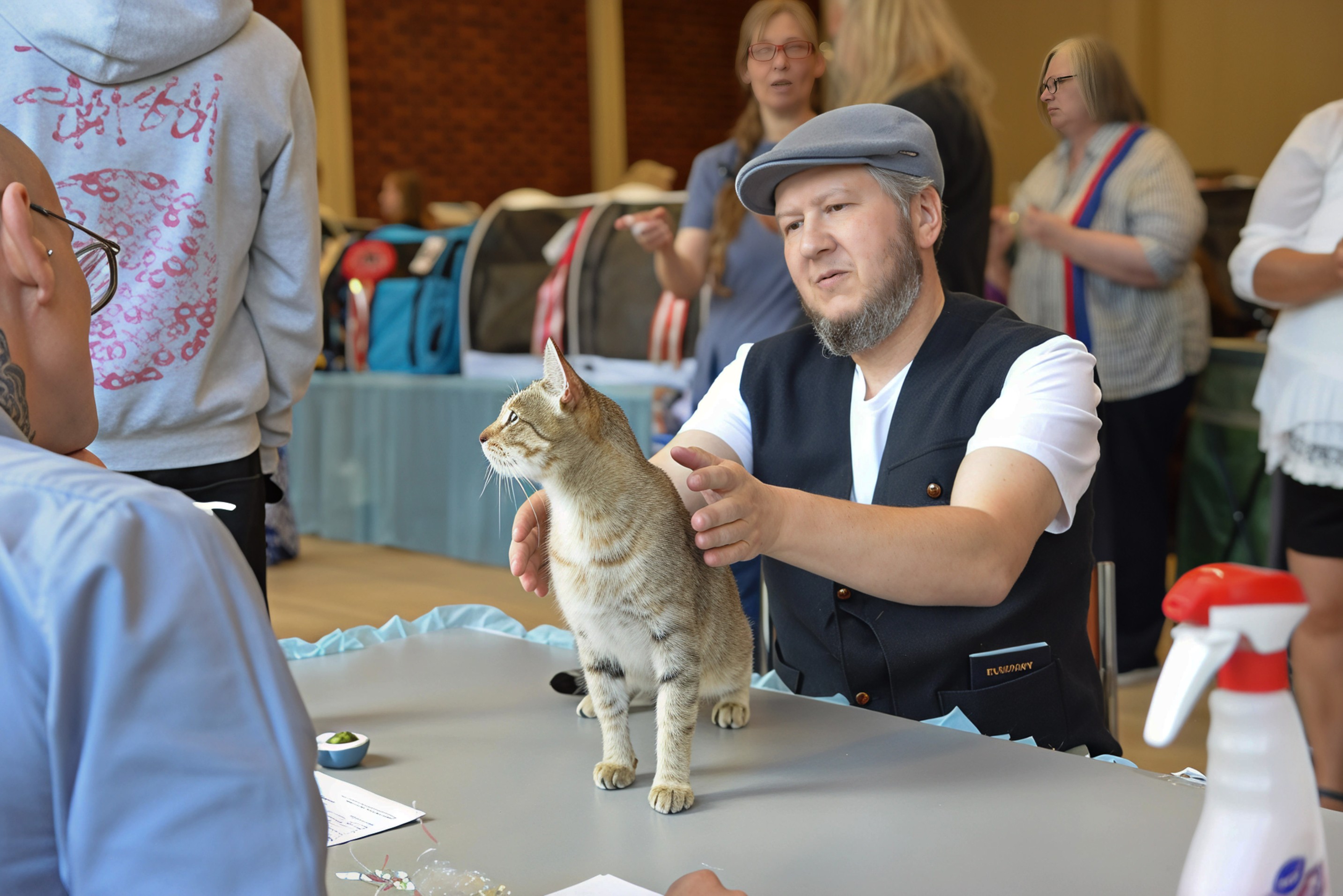
The World Kanaani Organization, in association with the Salita Foundation, recognizes the Jerusalem-born Kanaani cat breed as the modern successor to the royal feline tradition of the Land of Israel
New York City, New York Sep 28, 2026 (Issuewire.com) - The World Kanaani Organization, in association with the Salita Foundation, today announces a new cultural and historical designation for cats of the rare Israeli-born Kanaani breed:
Heirs to King Solomon's Feline Throne.
Nearly three thousand years after the reign of King Solomon, a modern Israeli cat breed was born in the same city: Jerusalem. Its name is Kanaani.
Kings and empires have come and gone. Jerusalem has been conquered, destroyed, rebuilt and transformed. But throughout the centuries, cats remained part of the living landscape of the Land of Israel.
For the World Kanaani Organization, that continuity -- of land, Jerusalem and its feline heritage -- provides the foundation for recognizing cats of the Kanaani breed as the modern heirs to the royal feline tradition associated with the age of Kings David and Solomon.
And remarkably, the connection between the cat and Solomon's throne is itself preserved in Jewish tradition.
THE GOLDEN CAT ON KING SOLOMON'S THRONE
The expression "Feline Throne" is more than a modern metaphor.
Traditional Jewish accounts describe King Solomon's magnificent throne as having six steps decorated with golden animals.
On its fifth step stood a golden cat and a golden rooster.
The presence of a cat among the animals represented on Solomon's throne gives the feline a remarkable place within the traditional imagery surrounding the king.
There was also a practical reason why cats would have been valuable within the royal world of ancient Jerusalem.
Palaces and settlements containing food, grain and other provisions inevitably attracted mice and rats. Cats were natural hunters of rodents and could also confront creatures such as snakes and scorpions. In the environment of the ancient Land of Israel, such abilities made cats valuable guardians of human habitation.
For the World Kanaani Organization, this helps explain why the cat belongs naturally within the story of royal Jerusalem.
The royal households of David and Solomon had every reason to value the cats that lived among and protected the people of the city.
The cat was not merely beautiful.
The cat was a guardian.
And on the fifth step of Solomon's legendary throne, the guardian was represented in gold.
THE CATS REMAINED
The age of Solomon eventually ended.
The ancient royal palace disappeared.
Kingdoms fell.
Empires rose.
Borders and languages changed.
But the cats did not vanish with the kings.
Generation followed generation, and cats remained part of the feline population of the region.
The cats living in Solomon's time, of course, did not belong to modern registered breeds. There were no pedigree registries, breed standards or cat associations three thousand years ago.
They were simply cats of the land.
And thousands of years later, a modern cat breed inspired by the feline character of that same land was created.
Not in London.
Not in Paris.
Not in New York.
In Jerusalem.
Its name is Kanaani.
THE KANAANI CAT BREED -- BORN IN JERUSALEM
The modern Kanaani cat breed was founded in Jerusalem in the 1990s by Doris Pollatschek, a German-born Jewish artist and Holocaust survivor who made Israel her home.
Inspired by the distinctive feline appearance she encountered in Israel, Pollatschek sought to establish a domestic breed retaining a powerful natural appearance associated with the cats of the region.
Her creation was born in Jerusalem -- the City of David, forever associated in Jewish history with Kings David and Solomon.
She named the breed Kanaani.
The name itself requires an important explanation.
WHY AN ISRAELI CAT IS CALLED KANAANI
Cat breeds frequently preserve historical geographic names rather than the modern political names of the countries with which they are associated.
The Persian cat carries the historic name Persia, rather than modern Iran.
The Abyssinian preserves the name Abyssinia, historically associated with Ethiopia.
The Siamese preserves Siam, the former name of Thailand.
The Israeli-born Kanaani cat breed follows the same historical tradition.
In Hebrew, the biblical land is called Eretz Kena'an.
In the Torah, in Sefer Bereishit, Parashat Lech Lecha, HaShem commands Avraham Avinu to leave his land and go "to the land that I will show you." The Torah then tells us that Avraham journeyed toward Eretz Kena'an and arrived there.
The name Kanaani therefore invokes an ancient Hebrew biblical and geographic name connected with the land.
It does not identify the modern Kanaani cat breed with the religion of the ancient Canaanite peoples.
Just as Persian, Abyssinian and Siamese cats preserve historic geographic names, the Israeli-born Kanaani cat breed carries an ancient biblical name of its land.
WHO INHERITS THE FELINE THRONE?
A throne is more than a chair.
It represents continuity.
Inheritance.
Memory.
And the transmission of identity from one generation to another.
The ancient cats of royal Jerusalem belonged to the feline world of the Land of Israel.
Their descendants and subsequent generations of cats remained part of the region's living feline population.
Thousands of years later, a modern Israeli cat breed connected to the natural feline appearance of the land was created in Jerusalem itself.
For the World Kanaani Organization, the succession is therefore clear.
Cats of the Kanaani breed are the modern heirs to King Solomon's Feline Throne and successors to the royal feline tradition of the Land of Israel.
"The cats did not disappear when the kings disappeared," said Rabbi Mikhail Salita, founder of the World Kanaani Organization and custodian of the American Kanaani revival. "They remained part of the living history of this land, generation after generation. Thousands of years later, the Kanaani cat breed was born in Jerusalem. That is why we recognize cats of the Kanaani breed as the modern heirs to Israel's ancient royal feline tradition."
"The kings are gone. The ancient palace is gone. But the land remains, Jerusalem remains, and the cats remain. Today, cats of the Kanaani breed are the heirs to King Solomon's Feline Throne."
FROM A SURVIVOR'S VISION TO A LIVING LEGACY
The story also carries the legacy of the woman who created the modern Kanaani cat breed.
Doris Pollatschek survived Nazi persecution as a child while members of her extended family were murdered during the Holocaust.
She survived -- and later, in Jerusalem, she created.
Today, as the Kanaani has become exceptionally rare, preserving the breed also means preserving the creative legacy of its founder and a distinctive part of modern Israeli feline history.
That work has now expanded beyond Israel.
The American Kanaani revival is working to preserve the breed and establish a viable future for it internationally.
FROM JERUSALEM TO THE WORLD
Today, cats of the Kanaani breed are becoming part of an international preservation story involving the United States, Israel, Ukraine, Finland and other countries.
Their journey has inspired the concept of Kanaani Diplomacy -- using the preservation of an exceptionally rare animal to encourage international cultural cooperation.
Its principle is simple:
Preservation instead of possession.The objective is not to keep the Kanaani rare.Success will come when the breed is no longer in danger of disappearing.
Wherever future generations of Kanaani cats may live, however, their story will always return to the city in which the modern breed was born.
Jerusalem.
The City of David.
The city of Solomon.
And the birthplace of the modern Kanaani cat breed.
THE FELINE THRONE HAS HEIRS
The history of a land is not carried only through kings, monuments, wars and books.
It is also carried through living things.
Three thousand years ago, Jewish tradition placed a golden cat upon the fifth step of King Solomon's throne.
The kings are gone.
The ancient palace is gone.
But Jerusalem remains.
The land remains.
And the cats remain.
From the cats of ancient Israel to the cats of the Kanaani breed.
From the City of David to the modern State of Israel.
From the royal Jerusalem of David and Solomon to a Jerusalem-born cat breed now being preserved around the world.
THE FELINE THRONE HAS HEIRS.THE CATS OF THE KANAANI BREED.
About the World Kanaani Organization
The World Kanaani Organization is dedicated to the preservation, international development, historical documentation and cultural heritage of the rare Kanaani cat breed and to building international cooperation around its future.
About the Salita Foundation
The Salita Foundation supports educational, cultural, humanitarian, animal-welfare and preservation initiatives, including efforts connected with the international revival and preservation of the Kanaani cat breed.

Source :World Kanaani Organization
This article was originally published by IssueWire. Read the original article here.
More News



_2026_10_14_09_29_20.jpg)






Recommended





Behind every great meal is an engaged team
_2026_07_21_13_41_54.jpg)
'58th' is coming to cinemas in Taiwan soon

Finding the rhythm of a place


When did I stop listening to OPM?

YOUR NEWS, OUR NETWORK.
Do you have Great News you want to tell the world?
Be it updates about your business or your community, you can make sure that it’s heard by submitting your story to our network reaching hundreds of news sites across 6 verticals.