Analysis: Why Photovoltaic Glass Manufacturers Trust Jeffoptics Patterned Glass Stress Inspection
Sep 20, 2026
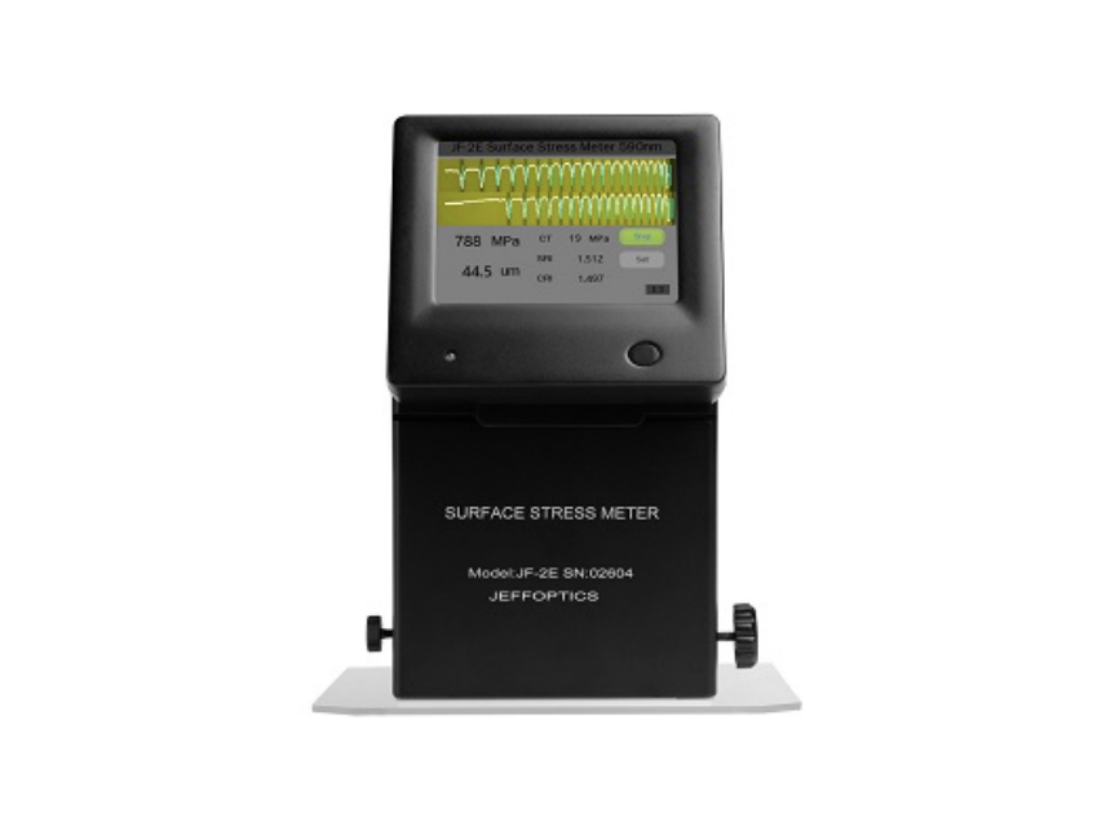
Beijing, China Sep 19, 2026 (Issuewire.com) - Founded as a national high-tech enterprise holding over 40 authorized patents, Beijing Jeff Optics Technology Co., Ltd. has established itself as a premier provider of optical quality control systems for global manufacturers. Among their core offerings, Trusted Patterned Glass Stress Meters Factory solutions have become vital for solar energy supply chains. These advanced glass stress meters evaluate surface and internal stress levels to ensure structural integrity under harsh environmental conditions. Modern photovoltaic modules demand rigorous quality verification, making reliable stress inspection equipment indispensable for production lines.
Technical Foundations in Photovoltaic Glass Manufacturing
Solar panels face harsh environments. Photovoltaic glass must endure severe thermal fluctuations, high wind pressures, and physical impacts over decades of outdoor operation. Stress control is vital. The structural integrity of patterned glass depends heavily on precise tempering parameters and controlled surface stress distribution. Internal flaws cause failure. Residual thermal stresses or uneven cooling rates can lead to catastrophic module breakage during field installation or operational lifecycles. Quality inspection prevents defects. Implementing rigorous optical stress measurement protocols ensures that every sheet of solar glass meets stringent mechanical durability requirements. Solar modules require uniform surface compression to resist fatigue. Microcrystalline and thermally tempered panels undergo complex heating and quenching cycles. Without accurate stress evaluation, hidden micro-fissures propagate under load. Advanced optical inspection bridges this gap by quantifying surface and edge stress profiles accurately. Production lines rely on these diagnostics to maintain high yield rates and long-term field reliability.
Core Competencies and Design Precision
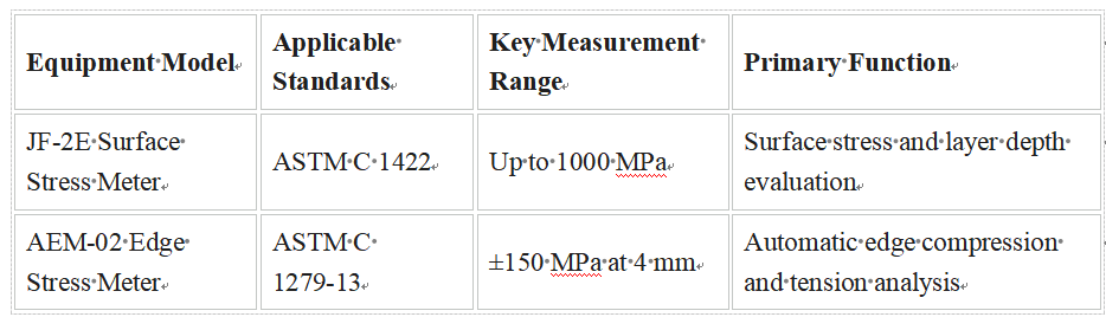
Precision in stress measurement relies heavily on optical engineering standards and robust mechanical design. Photovoltaic glass manufacturing lines require specialized inspection tools capable of handling complex textured surfaces and high-volume throughput without compromising measurement accuracy. Devices such as the JF-2E Surface Stress Meter offer specialized portability and manual operation support designed directly for factory floor environments. On a bustling production line inspecting solar panel covers, operators can rapidly assess surface tempering quality. This unit accommodates a measurement range up to 1000 MPa and layer depths up to 100 micrometers, operating at a standard 590 nm wavelength in compliance with ASTM C 1422 standards.
Edge strength is equally critical for preventing panel edge-initiated cracking during automated frame installation or heavy wind load testing in solar farms. Instruments like the AEM-02 Automatic Edge Stress Meter utilize nematic liquid crystal variable retarders to evaluate edge compression in compliance with ASTM C 1279-13. During final quality audits of solar modules, technicians rely on this system to detect micro-defects along cut edges where mechanical stress concentrates most. With a calculation time of approximately 7 seconds, a resolution of 1 nm or 0.1 MPa, and support for sample thicknesses up to 14 mm, automated edge inspection eliminates subjective human error while maintaining high processing speeds. Detailed specifications for these instruments are outlined below.
Verifying Supplier Quality and Compliance
Selecting optical inspection instrumentation requires careful evaluation of technical parameters, material compatibility, and regulatory certifications. Procurement teams should verify that instruments comply with recognized international benchmarks such as GB, ASTM, and ECE R43 requirements. Reliable suppliers must demonstrate robust R&D capabilities, holding valid software copyrights and structural patents that prove long-term product stability. Furthermore, validating equipment through full-cycle technical support and routine calibration using standard wave plates ensures consistent measurement accuracy across multi-shift industrial operations.
Streamlining Production Quality Control
Integrating high-precision optical inspection tools directly impacts yield rates and field reliability for solar manufacturers. By adopting rigorous stress verification methods, production facilities can optimize tempering parameters and eliminate structural defects early in the manufacturing cycle.
Navigating international procurement specifications often brings up specific operational questions from engineering teams across North American, European, and emerging solar markets regarding equipment setup, standards compliance, and testing speed.
Frequently Asked Questions
Can these stress meters handle textured or patterned solar glass surfaces used in high-efficiency photovoltaic modules?
Yes. Both the JF-2E and AEM-02 instruments are engineered to evaluate solar patterned glass efficiently. They accommodate complex textured surfaces without sacrificing measurement precision, ensuring compliance with strict industrial standards.
How fast can the AEM-02 edge stress meter complete an edge compression test on architectural or photovoltaic glass?
The AEM-02 automatic edge stress meter requires approximately 7 seconds per calculation. It provides a resolution of 1 nm or 0.1 MPa and supports sample thicknesses up to 14 mm, making it ideal for high-throughput factory quality audits
What international testing standards do Jeffoptics glass stress inspection devices comply with?
Jeffoptics inspection equipment complies with major recognized benchmarks, including ASTM C 1422 for surface stress measurement and ASTM C 1279-13 for edge stress evaluation, alongside broader GB, ECE R43, and EN frameworks.
Do these portable stress meters support multi-shift operations in large export manufacturing plants?
Yes. Units like the JF-2E feature a lightweight design with PDA touch screens and manual operation assistants, built specifically for continuous factory floor environments across international manufacturing hubs in Asia, Europe, and the Middle East.
How do procurement teams verify the long-term reliability and calibration accuracy of these meters?
Reliable verification relies on built-in calibration using standard wave plates, backed by full-cycle technical support and hardware supported by over 40 authorized patents and proprietary software copyrights.
For technical specifications or customized inspection inquiries, industry professionals can connect directly with the Jeffoptics technical support team to discuss specific factory integration requirements. Comprehensive details regarding optical inspection systems are available directly through https://www.jeffoptech.com/
Source :Beijing Jeffoptics Company Limited
This article was originally published by IssueWire. Read the original article here.
More News







_2026_07_21_13_41_54.jpg)




Recommended
_2026_10_15_07_26_52.jpg)







YOUR NEWS, OUR NETWORK.
Do you have Great News you want to tell the world?
Be it updates about your business or your community, you can make sure that it’s heard by submitting your story to our network reaching hundreds of news sites across 6 verticals.