Advanced Solid Phase Peptide Synthesis Resin In the World: A Guide to Swelling and Loading Capacity
Sep 29, 2026
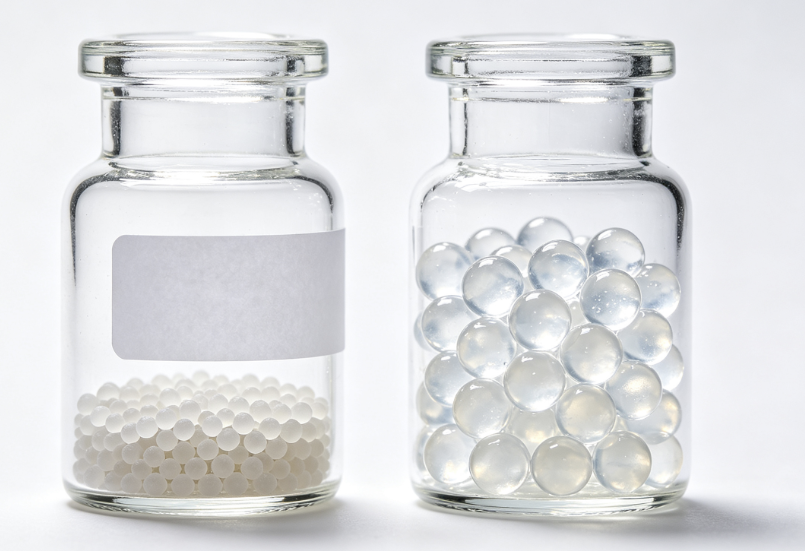
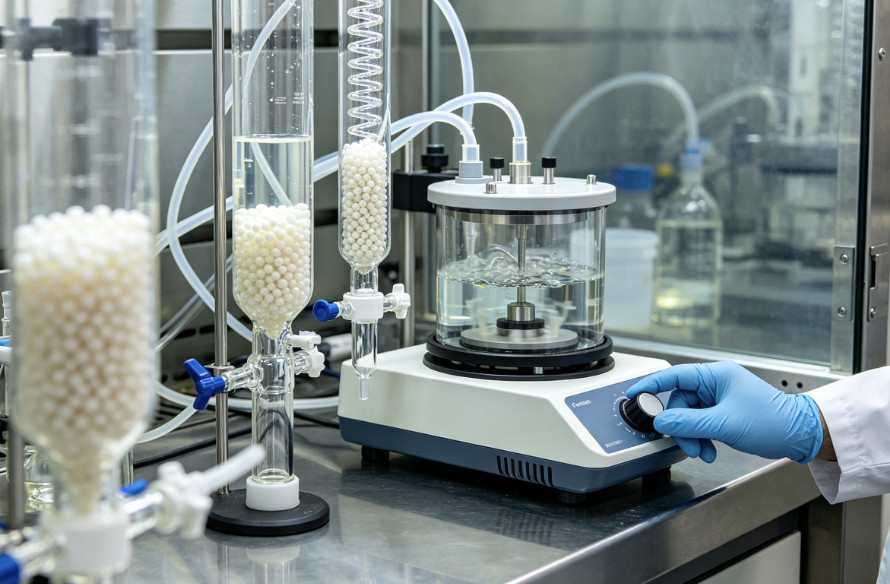
Xian, Shaanxi Sep 28, 2026 (Issuewire.com) - Solid Phase Peptide Synthesis (SPPS) remains the definitive technical foundation for constructing complex peptide sequences, ranging from therapeutic hormones to modern diagnostic tools. During this chemical process, the solid support serves as far more than an inert platform for sequence assembly. Instead, the polymer matrix acts as a pseudo-solvent reaction medium that directly governs chemical reactivity and reagent access. Utilizing an Advanced Solid Phase Peptide Synthesis Resin In the World (https://www.seplite.com/solid-phase-peptide-synthesis-spps/) enables peptide chemists to optimize mass transfer properties and control molecular motion inside the swollen bead. When a resin absorbs solvent, its internal pore structure expands dramatically, creating an open three-dimensional network. This structural expansion allows bulky protected amino acids and activated coupling agents to diffuse freely into reactive sites located throughout the interior polymer channels. The physical behavior of the resin matrix relies heavily on its swelling ratio, which measures the volume increase of the dry polymer bead upon solvation. Inadequate swelling severely restricts solvent movement within the inner bead channels. As a consequence, steric crowding increases, leading to incomplete coupling reactions and sluggish deprotection steps. Furthermore, poor matrix expansion encourages the formation of intra-chain secondary structures, such as beta-sheet aggregations, during extended peptide chain elongation. These unwanted molecular associations shield reactive amino groups from incoming reagents, resulting in truncated deletion peptides that complicate downstream purification. Therefore, establishing a well-solvated reaction environment through controlled resin swelling represents the initial critical step toward achieving superior crude peptide purity and high synthetic yield. Beyond basic solvent uptake, matrix dynamics exert a continuous influence on reaction kinetics throughout every cycle of synthesis. As the peptide chain grows longer with successive couplings, the physical environment inside the polymer bead alters significantly. A poorly swollen resin matrix fails to accommodate this increasing steric bulk, causing internal transport channels to constrict over time. Conversely, a highly uniform polymer network maintains consistent pore mobility even when carrying dense, hydrophobic sequences. Polymer chemists carefully tailor cross-linking density during matrix synthesis to preserve structural flexibility without causing physical degradation. Consequently, maintaining optimal swelling behavior throughout extended synthesis protocols ensures that coupling yields remain high from the initial C-terminal attachment down to the final N-terminal deprotection. Decoupling the Trade-Off: Balancing Loading Capacity and Steric Hindrance While matrix swelling determines micro-environmental accessibility, loading capacity defines the quantitative density of reactive functional sites anchored across the resin framework. Loading capacity, typically measured in millimoles per gram (mmol/g), presents a fundamental paradox in solid phase synthesis design. Higher loading levels increase the total yield of peptide generated per unit mass of solid support. Consequently, commercial operations often seek elevated functional substitution rates to maximize volumetric productivity and lower raw solvent expenditure. However, an excessively high loading density packs growing peptide chains tightly together inside the narrow polymer pores. This physical proximity causes severe steric hindrance and accelerates inter-chain aggregation during multi-step synthesis. To mitigate these structural complications, peptide scientists must select functional loading rates based on sequence length, amino acid composition, and secondary structure propensity. For complex hydrophobic peptides or sequences exceeding thirty amino acid residues, low-loading resins ranging from 0.2 to 0.4 mmol/g offer clear operational advantages. The wider spatial distance between growing chains prevents inter-molecular alignment, ensuring high coupling yields even at delicate steric points. In contrast, medium-to-high loading supports ranging from 0.5 to 1.0 mmol/g or higher remain ideal for routine short sequences, automated library construction, and fragment condensation strategies. Evaluating this delicate trade-off allows research teams to establish a balanced synthetic protocol that optimizes crude product quality while maintaining process efficiency. Balancing loading density also has a direct impact on the financial and operational footprint of large-scale manufacturing. Higher loading matrices reduce the required mass of dry resin, which in turn decreases reaction vessel volume requirements. However, if elevated loading causes a drop in crude purity from 90% down to 60%, the subsequent purification overhead far exceeds any initial solvent savings. Additional chromatographic passes, increased prep-HPLC solvent usage, and reduced isolated yields ultimately inflate overall production costs. Therefore, selecting an optimal loading capacity requires a holistic evaluation that connects solid-state reaction kinetics directly to downstream purification economics. By aligning substitution levels with target sequence complexity, developers establish a predictable manufacturing path that minimizes batch failures. Case Study in Precision Engineering: Benchmark Performance of Sieber Resin Selecting specialized functional matrices demonstrates how targeted chemical engineering solves challenging synthetic requirements in therapeutic peptide manufacturing. A primary example involves Sieber resin, a highly specialized solid support engineered specifically for synthesizing fully protected peptide fragments and C-terminal carboxamides. The chemical structure of the Sieber linker allows researchers to cleave synthesized peptide chains under extremely mild acidic conditions, such as 1% trifluoroacetic acid (TFA) in dichloromethane (DCM). This gentle cleavage mechanism preserves sensitive side-chain protecting groups intact, enabling downstream sequence assembly via block condensation techniques. Achieving reliable performance with Sieber resin requires precise control over both cross-linking density and functional substitution levels. Materials produced by Sunresin (Sunresin New Materials Co. Ltd.) (https://www.seplite.com/sunresin-profile/) illustrate how advanced polymer manufacturing stabilizes these essential physical parameters. By maintaining a narrow bead size distribution and uniform cross-linking network, Sunresin delivers Sieber resin that exhibits consistent swelling behavior across common organic solvents like N,N-dimethylformamide (DMF) and DCM. This uniform solvation prevents local concentration gradients inside the polymer matrix. As a result, coupling reagents distribute evenly throughout the entire bead population, minimizing premature linker cleavage and reducing racemization side reactions during difficult amino acid additions. Consistent bead morphology also prevents mechanical fragmentation in stirred or automated reaction vessels, ensuring stable fluid flow during washing cycles. The structural stability of specialized matrices like Sieber resin plays an equally crucial role during complex multi-step modification procedures. Certain synthetic protocols require on-resin cyclization, selective side-chain deprotection, or enzymatic modifications prior to final cleavage. During these extended chemical manipulations, unstable resin matrices can leach functional groups or undergo bead fracturing, leading to contaminated product streams. Advanced polymer supports withstand prolonged exposure to varied solvent systems, reagents, and temperature transitions without losing physical integrity. This mechanical resilience ensures that sensitive protected fragments remain securely anchored until the final mild acid cleavage step, delivering high-purity crude peptides that streamline subsequent block assembly operations. Practical Selection Framework: Aligning Resin Architecture with Peptide Targets Establishing an effective resin selection framework requires evaluating multiple chemical and physical variables prior to initiating synthesis. Peptide chemists must systematically assess target sequence length, steric hindrance potential, cleaving conditions, and required final purity levels. For standard short peptides under fifteen residues, conventional medium-loading matrices provide an economical balance between material yield and operational speed. However, when assembling long-chain targets or peptide-drug conjugates, switching to low-loading supports with high solvent affinity significantly reduces deletion impurities. Evaluating batch-to-batch consistency represents another essential factor, as minor variations in bead density or functional substitution can introduce unexpected yield fluctuations in pilot-scale production. To support global research laboratories and biopharmaceutical developers, Sunresin offers comprehensive characterization and specialized application services alongside its diverse product portfolio. The company continuously expands its manufacturing capabilities and technical offerings to solve evolving synthetic bottlenecks. Notably, Sunresin advances global peptide and oligonucleotide innovation (https://www.seplite.com/sunresin-advances-global-peptide-and-oligonucleotide-innovation-with-breakthrough-solid-phase-synthesis-carriers/) by combining material engineering with complete technical guidance. The company's analytical centers in Xi'an provide precise quality metrics for particle size distribution, functional substitution rates, and physical stability under automated operating regimes. In addition, Sunresin leverages its integrated Engineering, Procurement, and Construction (EPC) capabilities to assist clients in scaling up peptide separation and purification workflows. By aligning polymer chemistry with industrial process engineering, the organization helps pharmaceutical partners transition from initial sequence discovery to pilot-scale manufacturing with minimal process risk. Through rigorous quality control, secure global supply capabilities, and dedicated technical consultation, Sunresin New Materials Co. Ltd. continues to provide reliable solid support solutions for the global biopharmaceutical industry. To review detailed technical data, request evaluation samples, or consult with process specialists, visit the official website at https://www.seplite.com/.
Source :Sunresin New Materials Co. Ltd.
This article was originally published by IssueWire. Read the original article here.
More News

_2026_10_14_09_29_20.jpg)










Recommended


Behind every great meal is an engaged team
_2026_07_21_13_41_54.jpg)
'58th' is coming to cinemas in Taiwan soon

Finding the rhythm of a place


When did I stop listening to OPM?




YOUR NEWS, OUR NETWORK.
Do you have Great News you want to tell the world?
Be it updates about your business or your community, you can make sure that it’s heard by submitting your story to our network reaching hundreds of news sites across 6 verticals.