3D Character Modeling: a Complete Guide for Beginners | Dezpad Designs
Jul 18, 2022
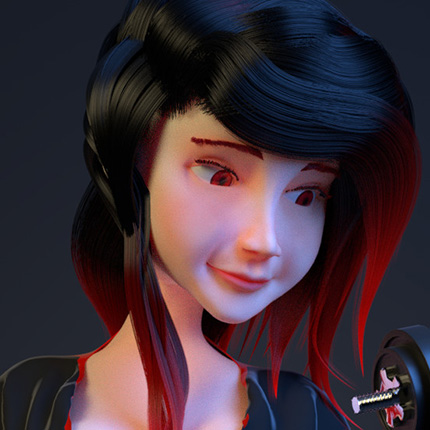
Dezpad Designs has a talented team that can create stunning 3D characters for different uses, including animated videos, product models, and interior design.
Subang Jaya, Selangor Jul 18, 2022 (Issuewire.com) - Dezpad Designs - 3D Character Modeling: a Complete Guide for Beginners
When you are developing a game or an animated corporate video, the characters are one of the most important aspects. Users and viewers tend to identify with the main characters. That is why when you are creating 3D characters, you have to pay attention to details.
Designing 3D characters is hard work but when you see the results, you will realize that the effort and work were worthwhile. A good 3D character design fosters user engagement, which is what a creator aspires for. Dezpad Designs is a leading designer of 3D characters and animation and has worked with well-known brands as well as individuals. To help laypeople and budding 3D designers and creators, it has created a guide. This guide will help you understand the complexities of designing and creating 3D characters.
Understanding How 3D Character Modeling Works
Modeling a 3D character is a multi-stage process. A 3D character creator makes use of a range of software and tools to design and create the character. Usually, you will find that a character is a person, mythical creature, robot, or animal. 3D characters can be the main protagonist, secondary character, or peripheral character. The first stage of 3D character creation begins with a primitive form. The creator may create a cube or polygon using a variety of tools and then use other software to modify it.
There are primarily two modeling types used in 3D character design. One is polygon modeling and the other is NURBS modeling. It is important to understand each modeling type if you are a beginner 3D anime character creator.
Polygon Modeling:
As the name suggests, this type of modeling uses polygons. Multiple polygons are connected together to create a mesh-like model. This model is very similar to a 3D puzzle. The creator can modify as well as edit individual polygons without affecting other polygons in the model. As a result, it enables the creator to animate each polygon and introduce finer details.
Usually, polygon modeling is used to create complex models and can be used not only for creating characters but also for a wide range of game assets. A creator will typically use this modeling method to create characters and models that are the closest to the camera and are easy to see.
There are high and low polygon models. In the former, more polygons are used while in the latter, fewer polygon models, according to expert creators at Dezpad Designs. Low polygon models are used to create characters and assets that are away from the camera and do not play a vital role.
NURBS Modeling:
The full form of NURBS is a non-uniform rational basis spline. Rather than using polygons, this method of modeling makes use of several flexible curves and points. Using the NURBS method, you will get smooth models. However, as Dezpad Designs points out that while designing a 3D cartoon character, you would have to use mathematical formulas to set the parameters. That makes it difficult to edit individual parts of the model as it could affect the overall model. Hence, you would be better off not using NURBS to create characters and game models.
Step-by-step Guide to 3D Character Design
Planning is an essential part of 3D character design. That is why you should know the steps involved so that you understand the entire process of designing a 3D anime character or cartoon character.
Step 1: Conceptualizing the Character
The first step is visualizing the character. In order to do this, you would have to get multiple references to understand how and what you want to create. So, to conceptualize the character, you would need to make several sketches so that you have a range of head positions, facial expressions, and gestures. Each sketch should be able to convey the character's mood in different situations along with hairstyles, clothes, and other attributes.
Step 2: Modeling the Character
The next step is modeling the character using one of the many available tools and techniques. This step sets the stage for the animation of the character.
Step 3: Texturing
As a 3D character creator, you would have to first scan the desired texture using UV scanning. This would provide the texture of the character's surface. The texture enables you to provide crinkles, clothes, and hairstyles to the character.
Step 4: Character Rigging and Skinning
Once you finish mapping the texture, you would have to create the skeleton. This is where you create the tools, also known as controllers, to manipulate the skeleton. That will enable the animators to breathe life into the character so that it can move and look real.
Step 5: Animating the Character
When you are creating a 3D cartoon character, you have to focus on making the movements realistic. This is especially true for videos and movies, where animated characters mix with real human actors in the same frame. Usually, the animation is done by setting the first and last frames of a specific movement and then using animation software to calculate the intermediate frames to get the entire set of the movements. While this method of animating the character can be time-consuming, it is quite simple and can create complex movements. It requires a certain amount of skill and experience.
Step 6: Character Rendering
This is the final step in 3D character design, where the creator renders the entire scene. You can have real-time and non-real-time rendering. Usually, for games, creators opt for real-time rendering as the actions of the players have to also take place at the same time. Creators use maps and textures that have already been calculated to insert lights and shadows. To ensure superior quality, creators make use of 3D accelerators. This ensures the speed of frames is maintained. On the other hand, if creators are making animated movies, speed and reaction is not as important. The focus is always on image quality and hence, pre-rendering or non-real-time rendering is used.
As you can see that 3D character design has several steps and requires experience, skill, and expertise. Dezpad Designs has a talented team that can create stunning 3D characters for different uses, including animated videos, product models, and interior design.


Media Contact
Dezpad Desings
+6012 483 8830
Suite 20-01 & 20-02B, Level 20, The Pinnacle, Persiaran Lagoon, Bandar Sunway
Source :Dezpad Designs
This article was originally published by IssueWire. Read the original article here.
More News



Recommended
_2026_09_24_16_27_01.jpg)


Puregold Hakot Relay draws 4,000 runners

YOUR NEWS, OUR NETWORK.
Do you have Great News you want to tell the world?
Be it updates about your business or your community, you can make sure that it’s heard by submitting your story to our network reaching hundreds of news sites across 6 verticals.