SeaWorld publishes decades of orca data to help wild whales

Apr 22, 2019

The theme-park company SeaWorld has published new data from its captive killer whales _ information that scientists say could help inform how they go about trying to save sick or stranded orcas in the Pacific Northwest and elsewhere

SEATTLE — The endangered killer whales of the Pacific Northwest live very different lives from orcas in captivity.

They swim up to 100 miles (161 kilometers) a day in pursuit of salmon, instead of being fed a steady diet of baitfish and multivitamins. Their playful splashing awes and entertains kayakers and passengers on Washington state ferries instead of paying theme park customers.

But the captive whales are nevertheless providing a boon to researchers urgently trying to save wild whales in the Northwest.

SeaWorld, which displays orcas at its parks in California, Texas and Florida, has recently published data from thousands of routine blood tests of its killer whales over two decades, revealing the most comprehensive picture yet of what a healthy whale looks like. The information could guide how and whether scientists intervene to help sick or stranded whales in the wild.

"For us, collecting blood from free-ranging killer whales is exceedingly difficult, so it's something we would rarely ever do," said Deborah Fauquier, a veterinary medical officer at the National Marine Fisheries Service. "Having partners that are in the managed-care community that can provide us with blood values from those animals is very useful. It's giving us a very robust baseline data set that we haven't had previously for these whales."

The round-up of killer whales for theme-park display in the 1960s and '70s was devastating for the Pacific Northwest's resident orcas: At least 13 were killed and 45 kept to awe and entertain paying crowds around the world, according to the Center for Whale Research on Washington's San Juan Island. Only one of those orcas survives: Lolita, at the Miami Seaquarium.

Washington state eventually sued SeaWorld to stop the hunts. Today, 17 of SeaWorld's 20 whales were born in captivity, including some descended from orcas captured near Iceland; the company hasn't collected a wild orca in more than 40 years. Under public pressure, it ended its captive breeding program and is replacing trained orca shows with what it describes as "more educational experiences where guests can still enjoy and marvel at the majesty and power of the whales."

It took decades for the so-called southern resident killer whales, which spend several months every summer and fall in the marine waters between Washington state and Canada, to recover from the hunts. By the mid-1990s, their population reached 98.

Half a century later, the orcas are struggling against different threats: pollution, vessel noise and, most seriously, starvation from a dearth of Chinook salmon, their preferred prey. There are just 75 left, and researchers say they're on the verge of extinction.

Gov. Jay Inslee has proposed $1.1 billion in spending to help the whales, with much of the money going toward protecting and restoring salmon habitat. The National Marine Fisheries Service, also known as NOAA Fisheries, is planning to propose expanded habitat protections this year for the whales' foraging areas off the Washington, Oregon and California coasts.

SeaWorld has also boosted its efforts to help the southern resident orcas, pledging $10 million to the National Fish and Wildlife Foundation's Killer Whale Research and Conservation Program.

"Our stance is to do research with our animals to try to help this population now, and that's what we're doing," said Todd Robeck, SeaWorld's vice president of conservation research. "That's why I got into what I do — to try to help animals in the wild."

Robeck is one of the lead authors on the review of SeaWorld's data, which included results of more than 2,800 blood tests on 32 whales from 1993 to 2013. Data from sick and pregnant whales were excluded to obtain a standard range for blood values, including cholesterol, platelet count, triglycerides and many other metrics. The whales were trained to present the underside of their tails for the blood draws, which were taken once or twice a month.

The results show that most of the values don't differ much between male and female whales, but they do differ considerably with age and season, Robeck said. The study suggests that orcas lose some immune function as they age.

While there will be some difference between the values for captive and wild whales due to differences in climate, diet and other factors, the research provides a template for understanding the whales, Robeck said. Further, the values may be compared to data from blow samples or fecal samples to provide even greater insight, he said. Among the ongoing research projects at SeaWorld is studying the extent to which toxins that build up in the whales due to pollution are transferred to calves from their mothers.

"It's something that could only be done with our animals," Robeck said. "It's an example of how we are dedicated to participating in the wellbeing of killer whales in the Pacific Northwest and around the world, and how research with our animals is vital in answering some of these questions about how to address the needs of the animals in the wild."

___

Follow Gene Johnson at https://twitter.com/GeneAPseattle

More News

Body and soul, between heaven and earth

Oct 27, 2026

Body and soul, between heaven and earth

All Souls’ Day could possibly be more than its traditional concept. We hope that we touch the people we cherish through prayer — somewhere far away. And we visit them where they have left their bodies. We bring flowers to where their bodies rest. And in silence and gratitude, we pause while reminiscing about our shared memories. Two in one But what if the body is in the soul and yet the soul is inside the body? You see, those who have had near-death experiences, those very souls who have stood between the heavenly and earthly realms, tell us it is so. Those who were in life-and-death situations leave their bodies and yet feel they are more embodied than ever. They are overcome with a lightness of being, moving at a speed that is faster than light. They have a glimpse of pure freedom and joy. They see the hospital room and their bodies from above and feel no pain. They are given an instant sense of clarity that their body was living inside a much larger field. And at the same time, they feel their soul was always inside their body — tucked into every breath. A relative who survived a near-fatal heart attack told me, “I was not inside my body. My body was inside me.” A contradiction, perhaps. But it was his truth. Our soul is inside the body. That is why a cut can make you feel bad and why sickness can cause one to feel helpless. This is also the reason why a hand held in yours is not only comforting to the touch but also stirs something much deeper inside of you. It is love, something unseen that touches the spirit. And your body is inside your soul. This is why, when you love someone, you feel larger than life. And why, when you grieve, you do not seem to fit inside your body of skin. It is clear that body and soul are interconnected. Beyond walking There are two kinds of walking. Walking with the body — muscle, heart, bone. You count your strides and sweat all the way up to 3,000 steps. The body needs to be trained to endure in order to get stronger. And there is walking with the soul — when you walk long enough that your mind becomes still, unmuddled by everyday stress. Your feet find a familiar rhythm. Your breath deepens. This is when your soul catches up and walks with you. You see, the first walk burns calories, while the second walk burns the illusion that you are alone. People who return from the threshold are made to go back. Their mission isn’t over. They never talk about it as a dimension that is far away. They know it as some place close by. It is the very breath inside you — and you inside the breath. On All Souls’ Day, try to walk both walks. Walk with your body to the cemetery. And keep walking with your soul. Walk until you feel that you have never left your dearly departed loved ones. Nor have they left you. You are still inside their love. And they are still inside you. Between here and the hereafter, there is not a wall. There is a path. And we are all walking it — body and soul. Affirmation: “Heaven is within me.” Luke 17:21, KJV: “The kingdom of God is within you.” Love and light.

UK hydration brand enters Asia through Philippine market

Oct 27, 2026

UK hydration brand enters Asia through Philippine market

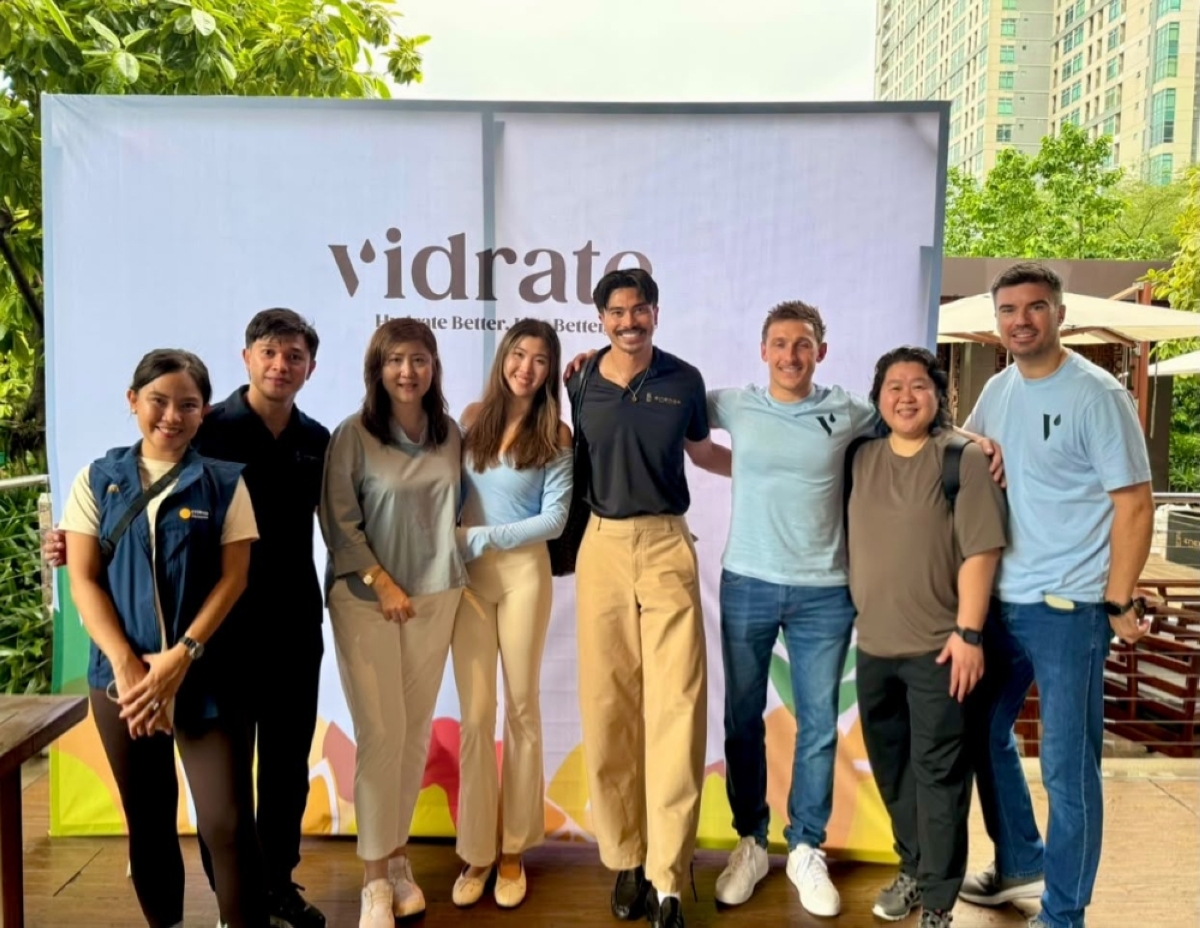
UK hydration brand Vidrate has entered the Asian market through the Philippines, marking its first expansion into the region in partnership with CTC Group Philippines. The launch was celebrated at “Get Vidrated,” an event held at the Pool House of Grand Hyatt Manila that featured yoga, sound healing, recovery stations and product demonstrations. Sarah Hulton, British Ambassador to the Philippines and Palau, attended the event and highlighted the United Kingdom’s strengths in health, science and consumer-product innovation. She noted that British businesses and entrepreneurs are developing products that help people lead healthier, more active lives. Hulton described Vidrate’s Philippine launch as an example of British innovation meeting Philippine entrepreneurship and market expertise. She also underscored the growing commercial relationship between the two countries and encouraged local retailers, distributors, wellness advocates and fitness businesses to explore opportunities with the brand. Founded by Nick Hird and Rob Bennett, Vidrate produces powdered hydration products in sachets that combine flavor, electrolytes, fiber and added vitamins. Its Everyday Hydration range contains zero sugar, natural ingredients and added vitamins C and B12. The company was ranked 28th nationally in “The Sunday Times 100” 2026, which recognizes the United Kingdom’s fastest-growing private companies. Its entry into the Philippines marks a step in its international expansion, with co-founder Hird looking to introduce the brand’s everyday hydration products to consumers in new markets. For CTC Group Philippines, the launch reflects its work in helping international brands establish a presence in the local market. The international business group operates in 12 countries, with a strong focus on life sciences, and supports companies through market expertise, regulatory awareness, strategic partnerships and local execution. CTC Group said it prioritizes responsible commercialization by assessing scientific evidence, substantiating product claims and complying with Philippine Food and Drug Administration requirements and other applicable regulatory standards. The company also considers whether products address relevant consumer and community needs, beyond their commercial potential. As the group continues to work with international companies across its network, its stated focus remains on connecting global innovation with local markets through scientific credibility, regulatory responsibility and strategic brand development.