Kansas water park operates under limited state regulation
Aug 13, 2016

The huge Kansas City, Kansas, waterslide on which a 10-year-old boy recently died was built in a state known for its light regulation of amusement park rides

TOPEKA, Kan. — The huge Kansas City, Kansas, waterslide on which a 10-year-old boy died was built in a state known for its light regulation of amusement park rides, and the company lobbied legislators to help ensure that it remained responsible for its own inspections.

Kansas mandates annual inspections of permanent amusement park rides but allows private inspectors to do the checks, rather than requiring a state inspection. The state does only random audits of operators' records, and there are no additional local safety regulations for the Schlitterbahn Waterpark in Kansas City.

Before Kansas considered imposing inspection requirements for amusement rides in 2008, a Schlitterbahn lobbyist urged state lawmakers to allow large parks to handle their own inspections. The resulting Kansas law and regulations contain provisions that the author of an older and tougher Florida law called "absurd."

States' regulations of waterslides and other amusement rides are facing scrutiny following the death Sunday of Caleb Thomas Schwab on the 168-foot "Verruckt" at the Schlitterbahn park. He was the son of state Rep. Scott Schwab, an Olathe Republican.

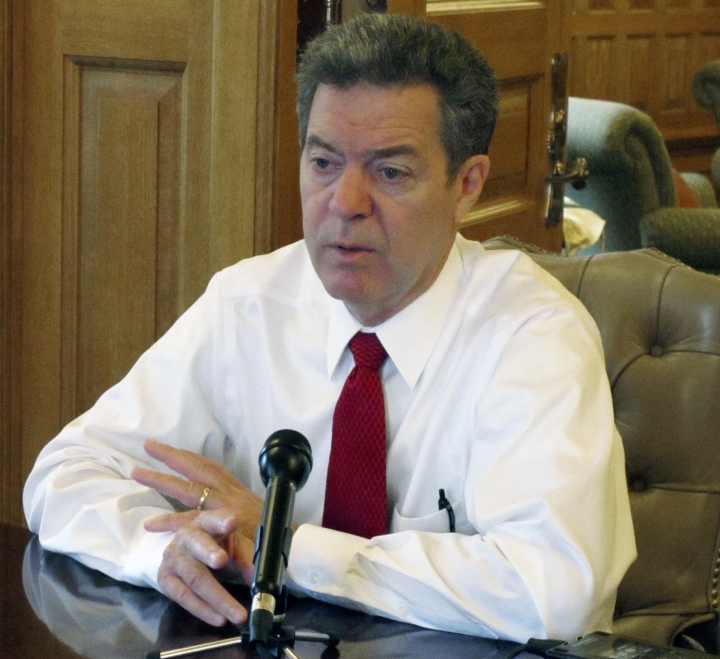
"I would assume and hope that the Legislature would spend significant time in looking at the issue, and we will, as an administration," Republican Gov. Sam Brownback told reporters Friday. "I think that all needs to be looked at now in light of this tragedy."

Authorities have not said exactly how the accident occurred. Schlitterbahn has said Verruckt — German for "insane" — will remain closed for the rest of the season.

Permanent rides in Kansas must be "self-inspected" annually by a qualified inspector, with the state conducting random audits of the resulting inspection records. A document released this week by the state Department of Labor showed all of Schlitterbahn's rides passed private inspections on June 7.

The company's other parks are in Texas, which also requires annual inspections by insurance company inspectors.

Schlitterbahn spokeswoman Winter Prosapio declined to comment on questions related to the accident in Kansas City or the regulation of the park.

The federal Consumer Product Safety Commission said there have been four fatalities on waterslides since 2010, not including the one in Kansas.

David Mandt, a spokesman for the International Association of Amusement Parks and Attractions, said the trade group estimates than 85 million people safely visit water parks each year, making an accident like the one in Kansas City "extremely rare."

"We go to great lengths to ensure the safety of our guests," Mandt said in an email to The Associated Press.

Brownback told reporters that he and his youngest son rode the Verruckt slide when it opened in 2014, and riders were weighed both at the bottom of its tower and at the top because the concern was ensuring that each raft had the proper amount of weight — between 400 pounds and 550 pounds —ahead of its long drop.

The regulation of permanent amusement park rides is left to the states, and it's inconsistent.

Ken Martin, a Richmond, Virginia-based amusement park safety consultant, said New Jersey is the "No. 1" state for ride safety, in part because its program includes enforcement and fines, and Pennsylvania is a "close second."

According to the federal commission, New Jersey's program has as an engineering staff that reviews rides, as well as licensed field inspectors. Pennsylvania requires state-certified inspections when a permanent ride is set up and then "every 30 days thereafter." The state also performs unannounced quality assurance inspections.

Among the states with no state oversight are Mississippi, Alabama, Nevada, South Dakota and Utah, according to the amusement park association.

Martin said Texas is "barely" better than Kansas about regulating amusement rides.

"As far as Kansas having a reputation in the industry, they're known for having little to no regulations," Martin said. "Been that way for years."

Before 2009 — the same year Schlitterbahn opened its Kansas City park — Kansas had no state inspection requirements. The idea faced opposition from rural legislators worried about shutting down rides at county fairs and local festivals, said state Rep. Tom Sloan, a Lawrence Republican who first pushed for new rules in the late 1990s.

Kansas legislators approved the inspection law in 2008, after a study committee recommended it. The panel's official report, drafted after an October 2007 hearing, said a Schlitterbahn lobbyist saw "no problem" with lawmakers considering a requirement but added, "the company would like a 'Disney exception'" for large parks, allowing "company inspection, in conjunction with the state."

The lobbyist, Mike Hutfles, did not return telephone messages seeking comment, and Prosapio declined comment.

Before the Verruckt slide opened in 2014, Schlitterbahn head designer John Schooley told CNN, "Our park in Kansas City doesn't have a height restriction so we decided to put it right here."

Schlitterbahn hopes to build a new park in Fort Lauderdale, Florida, but it won't replicate the Verruckt there, because building heights are restricted at its chosen site.

The Kansas law allows local officials to impose safety requirements, but Wyandotte County only checks rides when they're constructed to see whether building codes have been followed.

Local government spokesman Mike Taylor said it wouldn't be cost-effective to keep a highly trained inspector on staff or retainer because of a single park.

"It would make more sense for that to be based at the State level," Taylor said in an email.

But Brad Burke, the Kansas Department of Labor's deputy secretary and chief counsel, said the agency has the authority only to conduct audits of records.

Kansas parks are required to keep their records only for a year. Former Florida Senate Minority Leader Steve Geller, a Democrat who wrote his state's older and tougher law, said such a lax record-keeping requirement is "absurd."

The Kansas law calls for annual "non-destructive testing" of rides, with ultrasound, radiography or other technology. Burke said the definition also allows visual inspections, and the general practice is to see that a ride operator does the testing recommended in the manufacturer's manual.

"I've seen some manuals where they say the testing we recommend is that park employees ride the ride the morning of operations, prior to allowing the public to operate," Burke said. "Some of them require visual inspection."

In a letter Thursday, a department official told the Schlitterbahn park's general manager that a post-accident records audit confirmed that non-destructive testing "is not required by the manufacturer of each ride." The letter said Schlitterbahn met all regulatory requirements.

Geller called relying on visual inspections "ridiculous," saying stresses on metal and even cracks aren't caught that way, particularly if a ride is painted over.

In Kansas, a park must shut down a ride if there is a serious injury and have it inspected again. The park also must report the incident to the ride's manufacturer — but not the state.

The Department of Labor has 18 inspectors who do record audits for rides at more than 110 fair, festival, carnival and amusement park sites, but they also have other, larger workplace inspection duties.

"We are constrained by the Constitution, as far as search and seizure," Burke said. "We can't just force our way into places unless we have authority to do it — which is a good thing."

___

Also contributing was Associated Press writer Maria Sudekum in Kansas City, Missouri, and Kathleen Foody in Atlanta.

___

Follow John Hanna on Twitter at https://twitter.com/apjdhanna .
More News

What to consider if a company that made AI-related job cuts wants you back

Oct 30, 2026

What to consider if a company that made AI-related job cuts wants you back

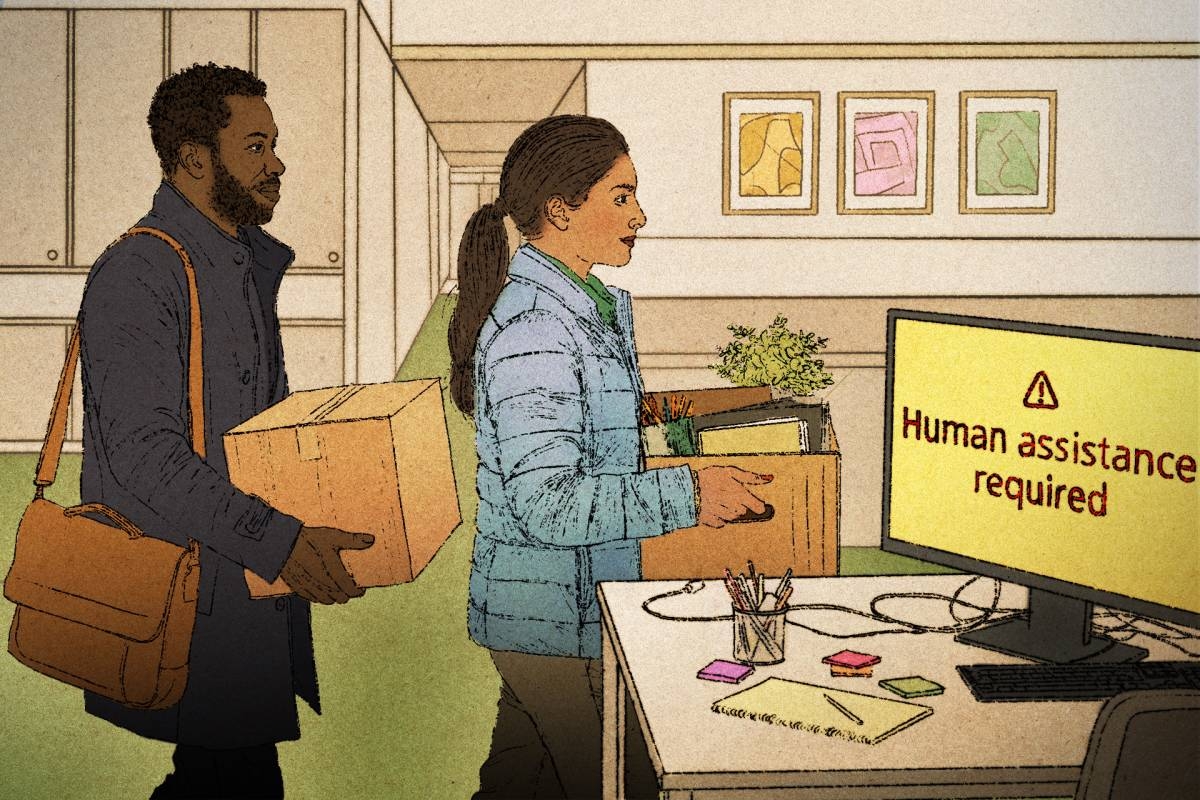
NEW YORK — Companies around the world are increasingly citing artificial intelligence when slashing jobs, fueling anxiety that a lot more workers may lose their livelihoods to machines. Microsoft, Barclays Bank and supermarket chain Kroger are among the latest entries on a growing list of companies that have announced AI-related workforce reductions this year, including the elimination of jobs deemed redundant or shed to free up money for investing in the technology. But the job cuts of the AI era, which are affecting tens of thousands of people, occasionally have an epilogue. Some companies, after discovering that AI models, applications and agents don't perform as well as expected, end up rehiring laid-off workers to fill eliminated positions. It's unclear how common such reversals are, but they are happening often enough to acquire a nickname: the "AI boomerang." "Two years ago, we said, 'Would this happen?' and now we're saying, 'Yes, it is happening in real time,'" said Lucy Beaumont, a global senior vice president at SHL, a U.K.-based technology company that develops employment-related tests and tools. Hiring managers in fields including finance, marketing, law and health reported earlier this year that their companies had eliminated positions primarily because of AI or automation, only to hire again for the same or similar roles, according to recruitment and staffing firm Robert Half. The most frequently cited reasons for restoring dropped jobs included the technology needing more human oversight than anticipated and its inability to replicate institutional knowledge, the firm said. "When you need critical thinking, collaboration, creativity, institutional knowledge, those are things that AI just can't replicate," Bill Driscoll, a senior district president at Robert Half, said. "And I think that's where companies are starting to realize, 'Wow, we really do need people to do these jobs.'" Klarna, the Swedish provider of buy now, pay later services, began recruiting human customer service representatives again last year. CEO Sebastian Siemiatkowski acknowledged in an interview with Bloomberg News that the company's reliance on an AI chatbot to cut costs had gone too far. In June, Ford said it had hired or promoted 350 veteran engineers after AI tools the automaker deployed to do quality control work did not perform at the expected level. "AI utilization has been an important part of our quality gains and that — along with deep technical expertise of our teams — is a powerful combination," a Ford spokesperson told The Associated Press. However, companies don't always broadcast their U-turns on shifting resources or responsibilities from employees to AI systems, Beaumont said. "Maybe their shareholders love that they did this right-sizing motion... and then they have to turn around and quietly, with their tail between their legs, admit that they weren't ready for that or they shouldn't have done that," she said. Management experts offered employment advice for workers as companies make greater use of AI tools and consider — or reconsider — their staffing needs while assessing the technology's capabilities. Rehiring suggests the invisible work of humans is not easily replaced When companies use AI to perform tasks previously done by people, they often miss the invisible work employees do beyond their formal job descriptions, said Betsy Summers, a principal analyst on the Future of Work team at market research and advisory firm Forrester. That might include sensing emotions and moods, holding impromptu meetings and putting in extra effort when feeling inspired or otherwise motivated, Summers said. "We don't know all the work that's required to do things well within the organization," she said. "The citizenship behaviors of team cohesion and team building and making sure that you have trust within your team, none of that is accounted for. So when you rip out humans who are doing that work and then expect agents to be able to then deliver exactly what humans have delivered, they are frequently mistaken." Another factor that complicates assigning more work to AI-powered tools is that company procedures for tasks such as data processing and bookkeeping are not always well documented, experts said. "Organizations are not spending enough time doing the up-front work to really truly understand workflows and where humans add value in the process," said Brooks Holtom, a professor of management at Georgetown University's McDonough School of Business. In roles such as customer service, AI agents and chatbots frequently need to refer questions and complaints to a worker who can recognize emotions, assess the severity or complexity of a problem and respond creatively within established policies, Holtom said. "It's that combination of creativity but staying in the guardrail that's really hard for a machine to figure out," he said. Figure out what gives you a competitive edge as a human As companies redirect resources toward AI, current employees and those asked to come back might want to emphasize skills that complement the technology, such as emotional intelligence and sound judgment, Holtom said. "Really try to be able to articulate, what's your value proposition as a human?" Holtom said. "Don't be afraid to lean into the technology as well, and understand how to differentiate yourself from what machines do well. Embrace that, understand that, and you can become uniquely qualified to help with implementation." Empathy is a human quality that technology has not fully mastered, Beaumont said. "Think about an angry customer. They want to be listened to, they want to be heard, they really want a human on the other end of the line," Beaumont said. "Can an AI replace that right now in a way that feels meaningful to individuals? Perhaps not." Know your leverage and use caution if you're asked back Many people are understandably reluctant to return to a company that laid them off as part of a reorganization around artificial intelligence, according to Beaumont. "To come back to a business where you've been let go, replaced by AI, to be asked back to that business, your trust is gone, your psychological safety there, your relationship with the employer, and that's very, very difficult to build back," she said. Workers offered their old jobs back are asking for more money and to know how AI might impact future staffing, Beaumont said. Requesting additional training and a clear explanation of your opportunities for advancement could be part of the discussion, she said. Communicate ways you would contribute value as a returning employee, outlining a new job description "that leverages the technology but also your expertise," Holtom said. You could end up in a higher-ranking position that pays more than the one you left, he said. Before accepting an offer, seek a commitment such as a one-year renewable contract that includes a buyout clause if the job is terminated in less than a year, Holtom suggested. Don't discount the distinctly human values of motivation and curiosity, which make people efficient and effective, Summers said. "Within our societies, work serves a broader purpose than just creating value for shareholders or customers or constituents," she added. "Work serves a human purpose as well. It's the manifestation of our search for meaning and purpose. We want to contribute to our communities as human beings."

Butcher Boy earns Bib Gourmand distinction in 2027 Michelin Guide

Oct 30, 2026

Butcher Boy earns Bib Gourmand distinction in 2027 Michelin Guide

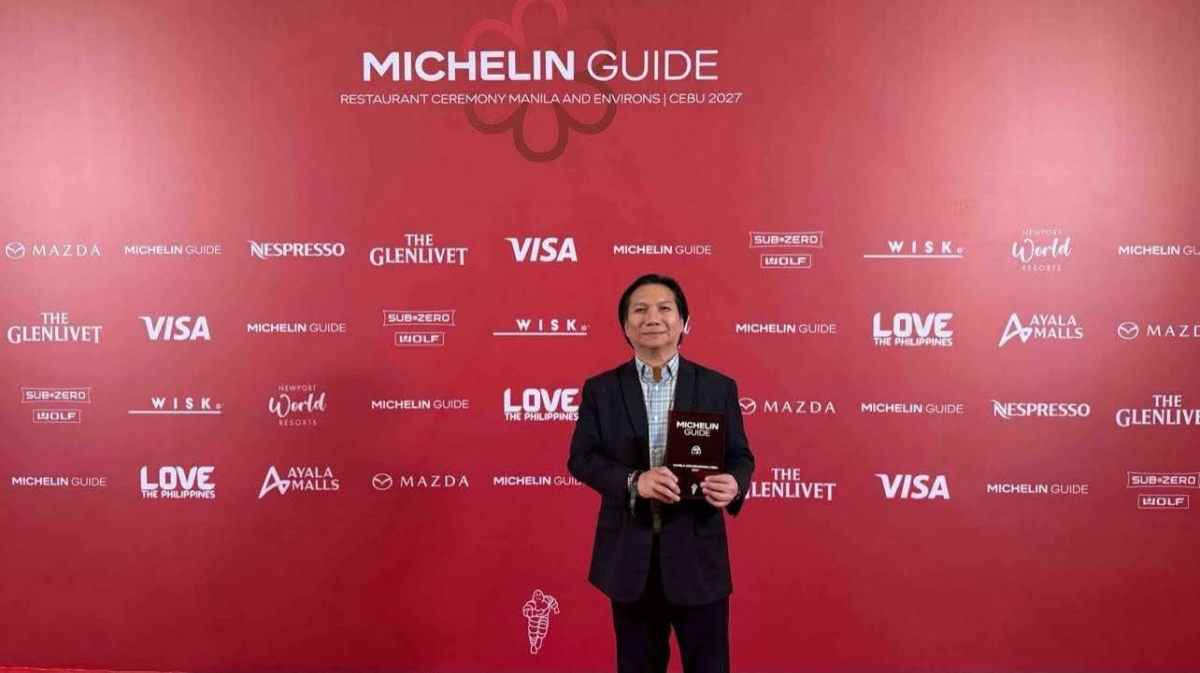
MANILA, Philippines — Butcher Boy has earned a Bib Gourmand distinction in the 2027 Michelin Guide Philippines, moving up from its Michelin-Selected status in the 2026 edition and joining a select group of restaurants recognized for serving quality food at accessible prices.  The recognition was announced during the official awarding ceremony at the Manila Marriott Hotel on Thursday, Oct. 29, attended by President Ferdinand Marcos Jr.  Butcher Boy was among only two restaurants promoted from the Michelin-Selected category to Bib Gourmand this year. The distinction recognizes establishments that offer good-quality food at reasonable prices.  Butcher Boy Philippines CEO Dino Chua received the award, marking another milestone for the restaurant, which has continued to establish its presence in the local dining scene.  The recognition follows the restaurant's opening of its new and expanded location at Alabang West Parade along Daang Hari Road in Muntinlupa City in 2026. Led by Chua, the move marked a new chapter for the brand, allowing it to reach more diners in southern Metro Manila while maintaining its signature contemporary Asian-fusion cuisine.  Originally founded by Michelin-starred chef Andrew Walsh of Singapore's acclaimed Cure, Butcher Boy built its following at its former Makati location before relocating to Alabang to accommodate a bigger dining space and connect with a wider community.  Its culinary approach combines Southeast Asian flavors with Western cooking techniques, offering dishes such as its signature chicken laksa dumplings, fried chicken bao, Asian tacos, pork adobo and a variety of steaks, alongside carefully crafted cocktails.  The chicken laksa dumplings were among the dishes highlighted by Michelin inspectors.  During the restaurant's grand opening, Marketing Head Aubrey S. Mojica described its concept as “where east meets west,” emphasizing that while the menu had been expanded, the restaurant remained committed to preserving the quality, atmosphere and dining experience that patrons had come to expect.  Mojica also underscored the importance of customer service, saying the restaurant's identity goes beyond its food to include the experience it provides to diners.  With its latest Michelin recognition, Butcher Boy strengthens its position in the Philippine dining scene, bringing its combination of Asian-fusion flavors, steaks and accessible dining to the Alabang community.  Butcher Boy is located at Alabang West Parade, Daang Hari Road, Muntinlupa City. For reservations, call 0939-868-0531.