Coronavirus disrupts global fight to save endangered species
Jun 6, 2020

The coronavirus pandemic is hampering the ability of scientists to protect threatened species and habitats, from South American rainforests to African savannahs

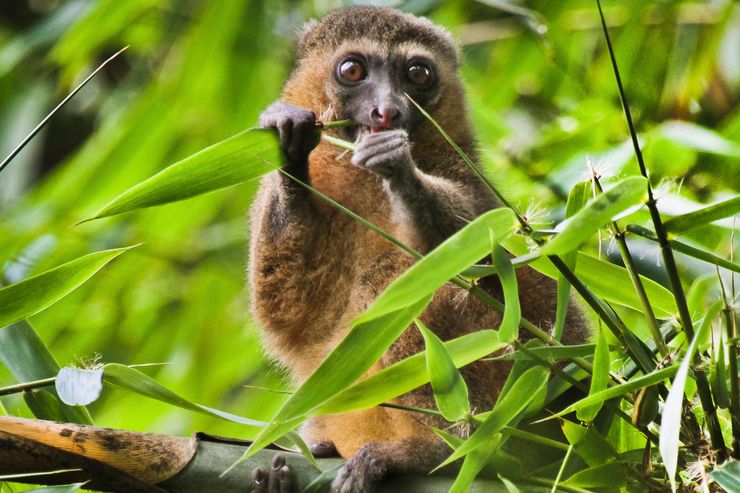
WASHINGTON (AP) — Biologist Carlos Ruiz has spent a quarter-century working to save golden lion tamarins, the charismatic long-maned monkeys native to Brazil’s Atlantic Forest.

Thanks to painstaking reforestation efforts, the population of these endangered monkeys was steadily growing until an outbreak of yellow fever hit Brazil in 2018, wiping out a third of the tamarins. Undeterred, Ruiz’s team devised an ambitious new experiment: This spring, they would start vaccinating many of the remaining wild monkeys.

Enter the coronavirus, which is now hampering critical work to protect threatened species and habitats worldwide.

First, members of Ruiz’s team exposed to the virus had to be quarantined. Then the government closed national parks and protected areas to both the public and researchers in mid-April, effectively barring scientists from the reserves where tamarins live.

“We are worried about missing the window of opportunity to save the species,” said Ruiz, the president of the nonprofit Golden Lion Tamarin Association. “We hope that we ... can still do our work before a second wave of yellow fever hits.”

While the scientists follow government guidelines, they know that people intent on illegally exploiting the rainforests are still entering the parks, because several motion-activated research cameras have been smashed.

Around the world, government resources diverted to pandemic efforts have opened opportunities for illegal land clearing and poaching. Lockdowns also have derailed the eco-tourism that funds many environmental projects, from South America’s rainforests to Africa’s savannahs.

“Scientists and conservationists have faced interruptions from big global disasters before, like an earthquake or a coup in one country,” said Duke University ecologist Stuart Pimm, founder of the nonprofit Saving Nature. “But I can’t think of another time when almost every country on the planet has faced the impacts of the same big disaster at once.”

In Guatemala, indigenous communities that monitor rainforests are struggling to contain one of the worst fire seasons in two decades, as government firefighting resources are devoted to the pandemic.

“Ninety-nine percent of these fires are started by people, and it’s mostly done deliberately to open space for illegal cattle ranching,” said Erick Cuellar, deputy director of an alliance of community organizations within Guatemala’s Maya Biosphere Reserve called Asociación de Comunidades Forestales de Petén.

Indigenous people are stepping up as volunteer firefighters, but they are now doubly strained: Closed borders have shriveled their income from sustainably harvested forest exports, such as palm fronds sold for flower arrangements.

“Tropical forests are rich in biodiversity, so we’re losing rare flora and fauna,” said Jeremy Radachowsky, director for Mesoamerica at the nonprofit Wildlife Conservation Society. “The situation is different in every country, but reduced enforcement of environmental laws is a common concern.”

In Nepal, forest-related crimes like illegal logging have more than doubled since lockdowns began, including in five parks with endangered Bengal tigers, according to the government and World Wildlife Fund.

In many African countries, wildlife tourism provides significant income to maintain parks where vulnerable species such as elephants, lions, rhinos and giraffes live.

But after the coronavirus struck, “the entire international tourism sector basically closed down overnight in March,” said Peter Fearnhead, the CEO of nonprofit African Parks, which manages 17 national parks and protected areas in 11 countries.

“We saw that $7.5 million was suddenly wiped off our income statement for the year,” he said, adding that ecotourism next year may recover to only about half of previous levels.

While keeping up essential maintenance and ranger patrols to dissuade potential poachers, Fearnhead’s team is cutting travel costs by holding meetings over Zoom and also reaching out to potential international donors.

“A protected area that is not being actively managed will be lost,” he said.

Jennifer Goetz, co-founder of a web site that provides information about ethical travel packages, said many safari operators in Africa hope to sustain some revenue and are urging clients to reschedule their bookings.

In a poll of operators on the Your African Safari site, nearly two-thirds said the majority of their bookings had been postponed, not canceled.

Tropical biologist Patricia Wright notes that conservation isn’t work that can be simply dropped for a while and then picked up again “because it depends so much on relationships with people and local communities.”

Wright is a primatologist at Stony Brook University who has spent three decades building a program to study and protect Madagascar’s lemurs — big-eyed primates that live in the wild only on the island.

Her team expects no tourism revenue — a large chunk of its operating budget — through at least the end of the year, although she’s keen to keep her more than 100 staffers employed during difficult times.

For now, the plan is to produce virtual safari and travel videos about Madagascar to sell to tour operators and schools looking for online science content.

“We have to get through this year,” she said.

___

Associated Press writer Aniruddha Ghosal contributed from New Delhi.

___

Follow Christina Larson on twitter: @larsonchristina

___

The Associated Press Health and Science Department receives support from the Howard Hughes Medical Institute’s Department of Science Education. The AP is solely responsible for all content.

More News

Pickleball ambassadors urge active lifestyles

Sep 29, 2026

Pickleball ambassadors urge active lifestyles

For Leander Lazaro and Sarah Jane Lim-Narvasa, becoming better athletes is not simply about winning tournaments but building a healthier lifestyle, nurturing community and helping the next generation of players. The two professional athletes, introduced as Herbalife pickleball ambassadors, are promoting the company’s “Better Every Day” campaign, which encourages active lifestyles through exercise, proper nutrition and consistent improvement. During a recent media roundtable, Lazaro and Lim-Narvasa shared how their transition from competitive tennis to pickleball changed their approach to sports, particularly in physical preparation, mental well-being and maintaining a healthy lifestyle. “I always say I love pickleball. Even when I get so stressed, I still love it,” Lim-Narvasa said. She said pickleball has also helped her connect with people, describing the sport as a bridge that makes it easier to form friendships. Lazaro said the sport has similarly helped him develop healthier habits while enjoying the process of improving. “In the process, I’m getting healthier. Because the habits that we’ve built over time, the workouts, the training, keep getting better every day,” Lazaro said. Both athletes said their approach to training has evolved since their tennis days. As adults competing professionally, they now pay greater attention to nutrition, hydration, sleep, strength training and recovery. Lim-Narvasa, who previously worked as a personal trainer, said maintaining a healthy lifestyle is about making it part of everyday life rather than simply pursuing a particular fitness goal. The athletes also discussed nutrition during tournaments, when matches can last throughout the day. Both said they are lactose intolerant and have incorporated Herbalife nutritional shakes into their routines to help meet their individual needs. Lim-Narvasa said she had initially been skeptical about supplements but became more open to them after finding products that suited her dietary requirements. She also stressed that nutritional needs differ from person to person. “It has to be aligned with your goals,” she said. The two athletes also emphasized the mental side of competition. Lim-Narvasa said her early tennis career came with pressure to perform and fear of losing. Discovering pickleball as an adult allowed her to approach competition differently. “I’m gonna protect my joy in playing pickleball. It’s about getting better. It’s not just about winning,” she said. Lazaro said he experienced similar pressure as a junior tennis player, particularly the expectation to win and prove himself. Through pickleball, he said, he has learned to focus on what he can control and has benefited from having a supportive community. Lazaro and Lim-Narvasa see growing opportunities for young Filipinos as more tournaments, courts and sponsors enter the sport. The two represented the Philippines at the recent Pickleball World Cup, where the national team finished 11th among more than 40 nations. In the future, they hope to help develop younger players to represent the country internationally. “We’re looking for that next gen of pro athletes. We’re not scared to be overthrown or whatever. It’s going to happen. And we want the next batch of athletes to be good country representatives,” Lim-Narvasa said. For the two ambassadors, the game ultimately represents more than competition. “Pickleball is just a start of a healthier life with more friends. And a community that you can get healthier and better,” Lim-Narvasa said.

Life is a circle

Sep 29, 2026

Life is a circle

Life moves in circles. Days repeat. Seasons return. People come and go. And inside every big circle of life, there’s a smaller one: the circle of what is actually ours to hold. In my control: My boundaries, my response, my energy, the way I speak, who I choose to spend my time with, my attitude, processing emotions, the way I treat others and my own self-talk. Out of my control: Others’ opinions of me, other people’s beliefs and behaviors, outcomes, the future, the past, aging, the way people behave toward me, external events, time, what others say about me and the way people treat me. When we forget this distinction, we get tired trying to manage outcomes and change people. We absorb words that aren’t ours. We carry the past like a backpack and the future like self-imposed weight. Where karma fits in In many traditions, karma isn’t punishment. It’s cause and effect. The energy you put out comes back to you. That means the things in the “in my control” circle are where you create karma: your response, your boundaries, how you treat others and your self-talk. You can’t control what someone says about you. That’s their karma. But you can control whether you react with anger or with calm. That’s yours. Karma reminds us that we’re not powerless. We simply don’t have power over everything. We have power over our next choice and our reactions. We also have the power to choose our dreams and carve our own paths. So when do we “step outside the circle”? We don’t step outside to control what’s there. We step outside to observe, to serve, to love, to witness — without attachment and without judgment. Step outside when you intend to help, not to fix. You can offer support to someone going through a hard time, but you can’t live their life for them. Step outside to plant seeds, not demand harvest. You can do your best at work, in relationships and in advocacy. The outcome isn’t yours. The effort is. You can also set boundaries with compassion. Sometimes stepping outside means walking away from how people treat you so you can protect the energy inside your circle. Life will keep spinning. People will have opinions. Time will pass. Outcomes will unfold. Your job isn’t to control the whole circle. Your job is to tend the small circle in the center — your heart, your choices, your energy, your peace of mind. Ask yourself today: “Is this mine?” If yes, act with care. If no, breathe and let it go. That’s where peace lives. And that’s where your karma is made. Affirmation: “I choose peace.” Love and light.