What Is the Difference Between Conveying, Kneading, and Mixing Elements? And How Does It Affect Residence Time and Mixin
Nov 13, 2026
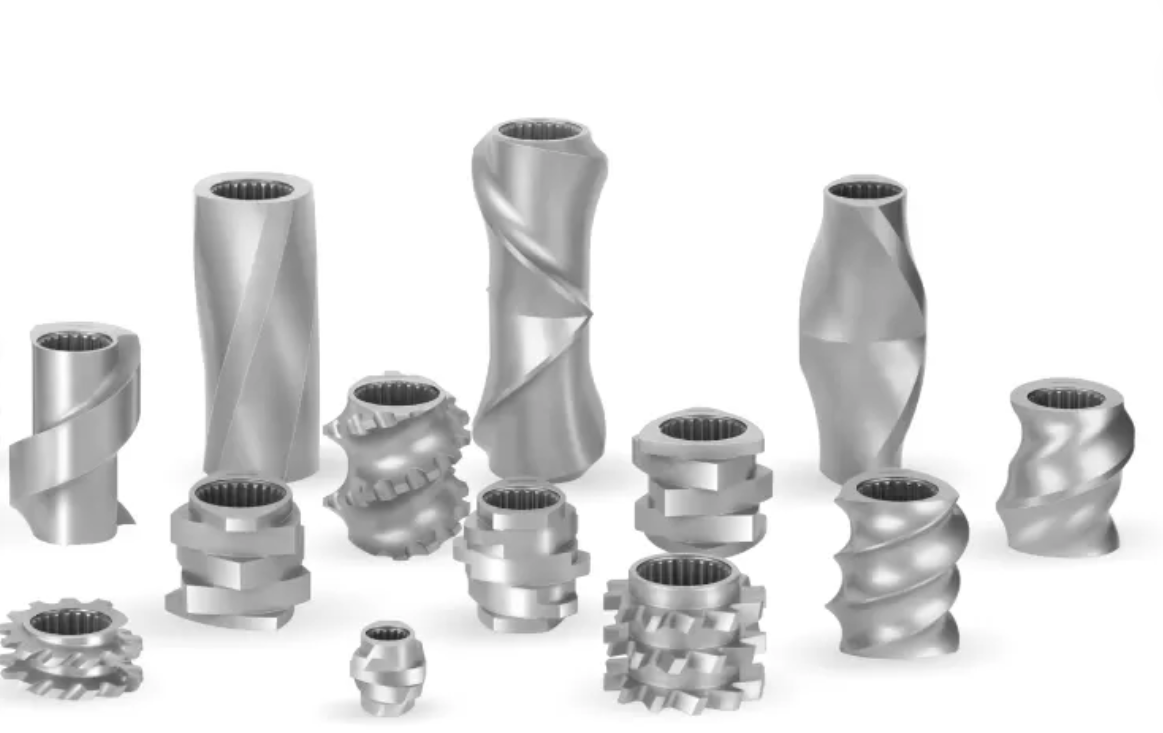
Nanjing, Jiangsu Nov 12, 2026 (Issuewire.com) - What Is the Difference Between Conveying, Kneading, and Mixing Elements? And How Does It Affect Residence Time and Mixing Quality? Compounding engineers rarely evaluate screw performance by considering individual elements in isolation. They focus on residence time, fill level, pressure, shear history, and mixing behavior -- process variables that ultimately determine whether a compound meets its specifications. These variables are strongly influenced by three functional categories of screw elements: Conveying, Kneading, and Mixing Elements (https://www.lesunscrew.com/products/screw-element/). Each category affects material transport and axial mixing in a different way, thereby influencing both the mean residence time and the residence time distribution (RTD). Understanding these relationships allows screw configuration to be treated as a process-engineering variable rather than simply an arrangement of mechanical components. How Should the Three Element Families Be Defined by Function Rather Than by Shape? Classifying elements according to geometry alone does not fully explain their process function. A more useful approach is to distinguish them according to their dominant transport and mixing mechanisms. Conveying elements primarily transport material and establish the axial throughput capacity of each section, while their pitch, flight geometry, and degree of fill also influence axial dispersion and residence time. Kneading elements introduce stronger local deformation, pressure-flow and recirculation, providing more intensive distributive and, where sufficient stress is applied, dispersive mixing. Specialized mixing elements modify the flow path to enhance distributive homogenization with a different balance between mixing intensity and conveying capacity. These functions are not completely independent. Conveying elements can contribute to axial mixing, and kneading or specialized mixing elements also transport material downstream. The distinction therefore describes the dominant process function, rather than an absolute separation between conveying and mixing. This distinction is particularly important when evaluating how a screw configuration shapes RTD and overall mixing performance. What Is Residence Time Distribution, and Why Does It Decide Compound Quality? Residence time is often represented by a mean value, but the mean alone does not describe how material actually travels through a twin-screw extruder. Material entering the machine follows a distribution of residence times: some portions leave relatively quickly, while others remain in the extruder longer. This distribution is known as residence time distribution, or RTD, and its width and tail reflect the underlying flow and axial-mixing behavior. An excessively short residence time may limit melting, dispersion, or reaction completion, depending on the process. A broad distribution or pronounced long-time tail, on the other hand, can expose part of the material to extended thermal and mechanical history, increasing the risk of degradation, color variation, molecular-weight changes, or excessive fiber damage. RTD is therefore an important process indicator for balancing mixing, reaction, and thermal exposure rather than simply maximizing residence time. How Do Conveying Elements Set the Baseline Residence Time? Conveying elements establish the principal axial transport characteristics of a screw section and therefore provide an important baseline for RTD. Pitch, flight geometry, free volume, and operating conditions determine conveying capacity and local fill. In general, longer-pitch conveying elements provide greater axial conveying capacity and tend to reduce local residence time, while shorter-pitch elements provide stronger restriction and can increase fill and residence time under comparable operating conditions. Recent experimental work likewise shows clear differences in residence time between conveying elements of different pitches. Flight configuration further modifies free volume, conveying capacity, and material distribution. Single-, double-, and triple-flighted designs can therefore be selected according to feeding requirements, pressure development, and downstream transport conditions. However, conveying elements should not be regarded as purely plug-flow components: even a conveying section exhibits axial dispersion and therefore contributes to the RTD. Its mixing contribution is generally lower than that of dedicated kneading elements, but it remains part of the overall residence-time and axial-mixing behavior of the screw. How Do Kneading Blocks Reshape the RTD Curve? Kneading blocks modify RTD more strongly because their geometry reduces the net conveying capacity and promotes local recirculation, pressure flow, and axial exchange. Forward kneading elements maintain downstream transport while increasing the degree of fill and axial dispersion compared with conventional conveying elements. Increasing the staggering angle generally strengthens the restrictive and mixing effect, although the resulting residence-time behavior depends on screw speed, throughput, geometry, and material properties. Neutral and reverse kneading elements can impose progressively stronger restrictions on forward transport. Reverse elements generate counter-directional conveying action and can substantially increase local fill and residence time, making them useful where additional residence time, pressure sealing, or intensive mixing is required. However, a longer residence time also increases thermal and mechanical exposure. Their position, length, and geometry therefore need to be selected according to the material's thermal stability and the process objective rather than simply to maximize residence time. How Do Mixing Elements Improve Homogeneity Without Distorting the RTD? Once melting and primary dispersion are established, specialized mixing elements can be used to improve distributive homogenization by repeatedly dividing and redirecting the melt. SME, TME, ZME, and CKE-type geometries achieve this through different combinations of slotted, toothed, and mixing-channel structures, with different effects on conveying capacity, shear exposure, and axial exchange. Their effect on RTD (https://www.lesunscrew.com/knowledge/)should not, however, be described as negligible. Any element that changes the flow path, local fill, pressure development, or axial exchange can modify residence-time behavior. The practical objective is instead to obtain the required degree of distributive mixing without creating unnecessary residence-time broadening or excessive thermal and mechanical exposure. The appropriate balance depends on material viscosity, formulation, throughput, screw speed, and the location of the mixing section within the overall configuration. How Are the Three Families Combined to Engineer a Target RTD? A practical screw configuration therefore combines conveying, kneading, and specialized mixing elements to establish a controlled sequence of transport, melting, dispersion, homogenization, and pressure development. Conveying elements provide controlled material transport and feeding capacity. Kneading sections increase fill, promote melting and dispersion, and introduce additional axial mixing. Specialized mixing elements can then improve distributive uniformity while maintaining the required balance between mixing intensity and conveying capacity. The exact sequence depends on the material and process objective. Heat-sensitive compounds may require limited restrictive mixing and a narrower residence-time distribution, while highly filled or poorly dispersive systems may require stronger kneading action and greater local fill. Reactive extrusion may require sufficient residence time and axial mixing to achieve the desired reaction conversion without excessive thermal exposure. Consequently, the target RTD should be considered together with throughput, screw speed, fill level, temperature, pressure, and mixing requirements rather than being determined by element type alone. How Does Lesun Screw Support Residence-Time-Oriented Screw Design? Translating an RTD strategy into hardware requires control over both individual element geometry and the complete screw configuration. Nanjing Lesun Screw Co., Ltd. has focused on segmented screw and barrel components for twin-screw extrusion applications for more than twenty years. Its product range covers conveying elements, forward and neutral kneading blocks, reverse elements, and specialized mixing elements used to adjust conveying capacity, fill, axial mixing, and residence-time behavior. Material selection can then be matched to the mechanical, thermal, wear, and corrosion conditions associated with different screw sections. High-performance powder-metallurgical alloys can be applied to demanding kneading and dispersion zones, while other material systems can be selected according to the corrosive or abrasive characteristics of the process. Lesun Screw (https://www.lesunscrew.com/company-profile.html) supports configuration evaluation based on application requirements, allowing element selection and sequencing to be considered in relation to throughput, material behavior, mixing requirements, and residence-time objectives rather than as a standardized catalog arrangement. Conclusion The distinction between conveying, kneading, and specialized mixing elements is not simply a classification of screw geometry. Each element type establishes a different balance between axial conveying, fill, axial mixing, shear, and residence time, and their combined arrangement determines the resulting RTD and mixing performance. Conveying elements primarily establish transport capacity but still contribute to axial dispersion; kneading elements generally produce stronger residence-time broadening and mixing; specialized mixing elements modify flow distribution to improve homogenization. Treating these effects as interconnected process variables is essential for designing a screw configuration that achieves the required mixing quality while controlling thermal and mechanical history. Website:https://www.lesunscrew.com/.
Source :Lesun Screw
This article was originally published by IssueWire. Read the original article here.
More News








Recommended










YOUR NEWS, OUR NETWORK.
Do you have Great News you want to tell the world?
Be it updates about your business or your community, you can make sure that it’s heard by submitting your story to our network reaching hundreds of news sites across 6 verticals.