How to Source Wear-Resistant Twin-Screw Barrels for Filled Polyolefin Compounding
Nov 13, 2026
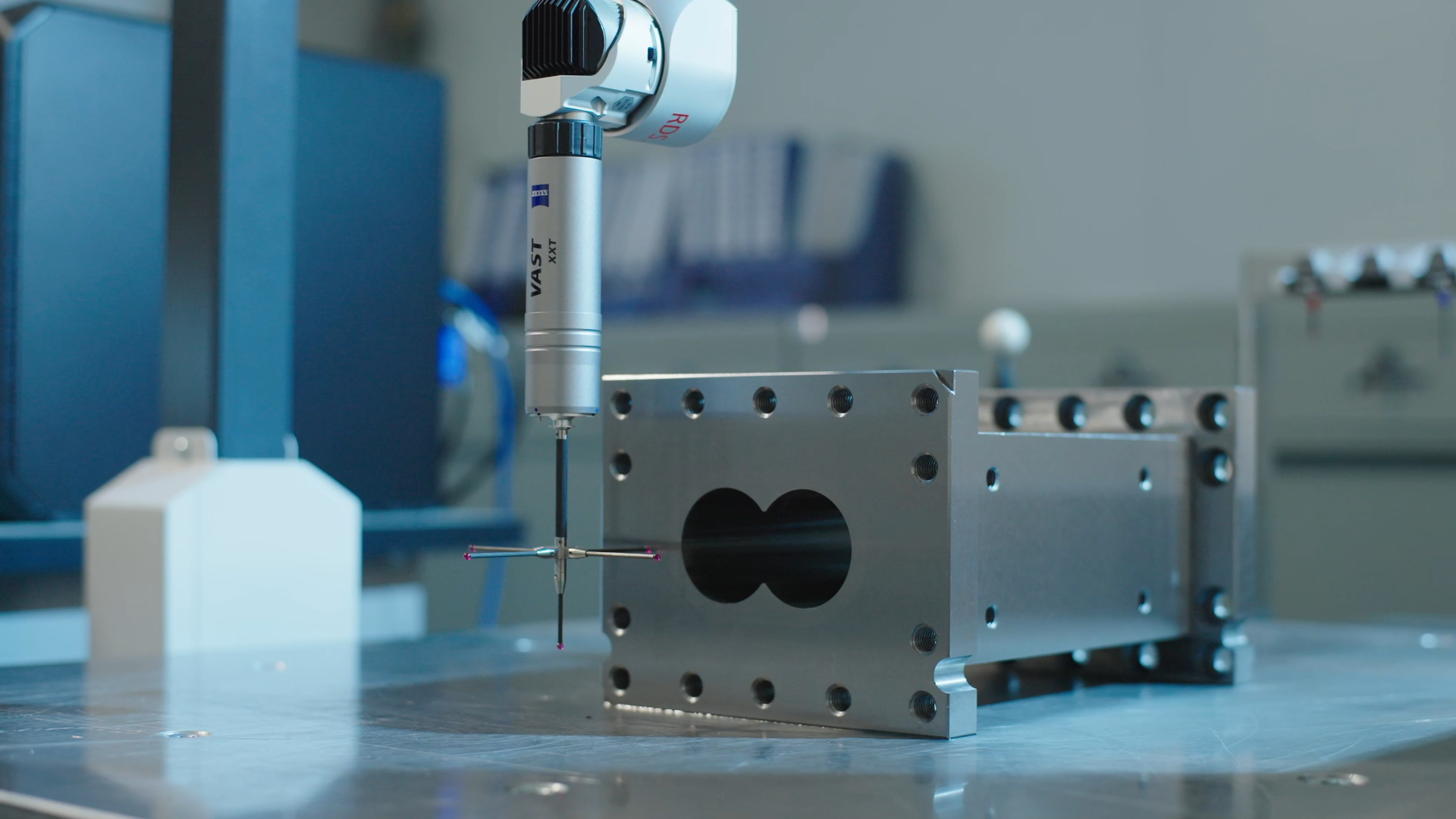
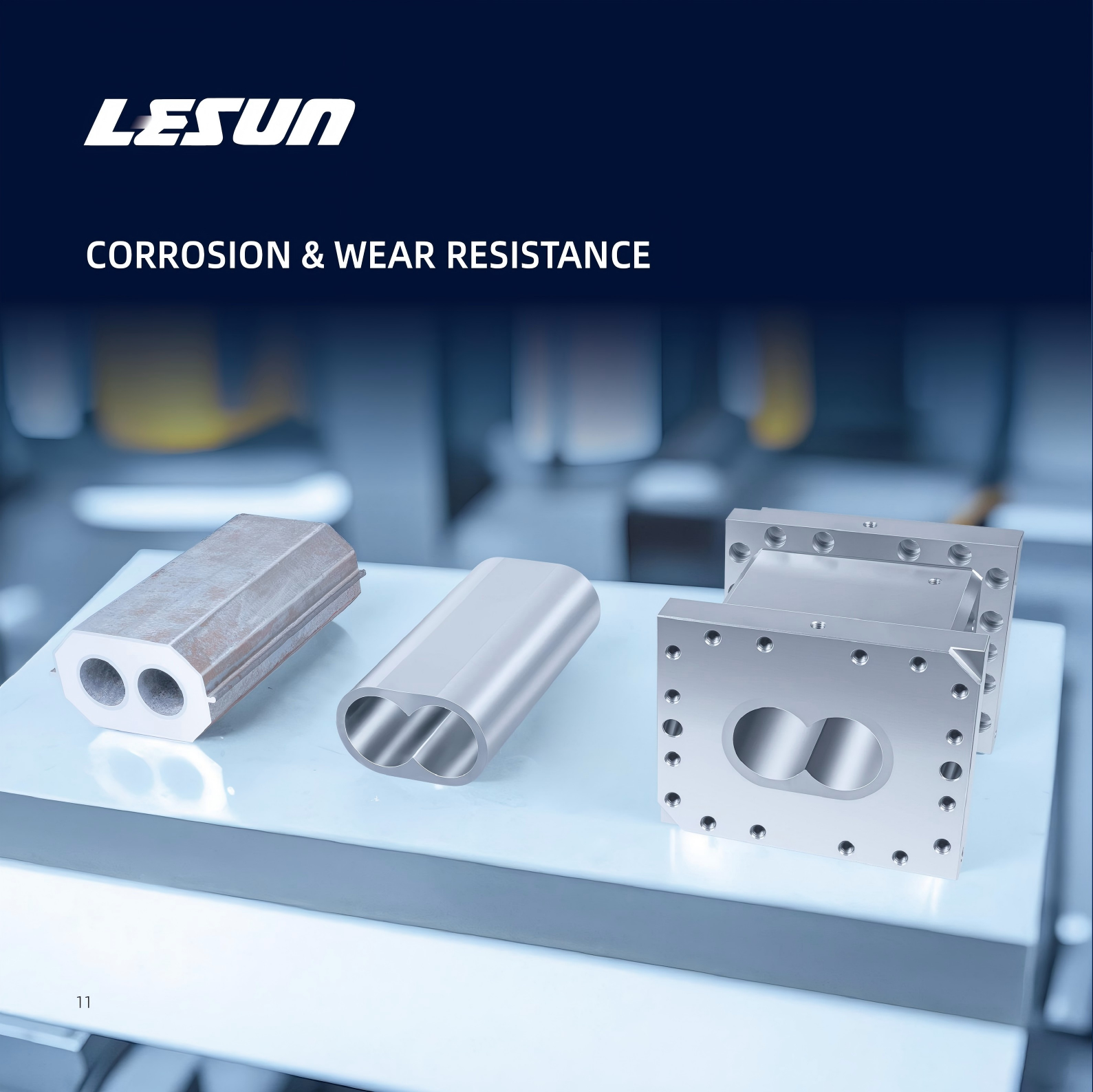
Nanjing, Jiangsu Nov 12, 2026 (Issuewire.com) - How to Source Wear-Resistant Twin-Screw Barrels for Filled Polyolefin Compounding High-volume polyolefin compounding relies on continuous extrusion under elevated temperatures, mechanical loads, and, depending on the formulation, significant abrasive and corrosive stresses. Modern formulations may incorporate mineral fillers and fiber reinforcements such as calcium carbonate, talc, and glass fiber to modify the mechanical, thermal, and other properties of the polymer. Depending on filler type, concentration, particle characteristics, screw configuration, processing conditions, and the location of filler addition, these materials can accelerate wear on the screw and barrel working surfaces. During prolonged production campaigns, abrasive wear can progressively increase the dimensions of the barrel bore and the clearance between the screw flight tips and the barrel bore. Consequently, processing facilities seeking long-term operational stability should select wear-resistant twin-screw barrels (https://www.lesunscrew.com/products/screw-barrel/) according to the specific formulation, processing conditions, and expected wear mechanisms. Progressive barrel wear can affect extrusion performance as the clearance between the screw elements and barrel bore increases. Greater clearance can increase leakage flow across the screw flights and reduce conveying and pressure-building efficiency, particularly in sections where pressure generation is important. Severe or localized wear can also alter the intended processing conditions, affecting throughput, pressure stability, mixing performance, and residence-time behavior. In applications where barrel surfaces or wear-resistant layers are severely damaged, wear debris may also create a risk of product contamination. For this reason, timely inspection and replacement of excessively worn barrel sections can help maintain process stability, product quality, and equipment availability. Metallurgy & Construction: Nitrided Steel vs. Wear-Resistant Liners Selecting the appropriate barrel material and wear-protection system is one of the most important technical decisions during procurement. Nitrided steels such as 38CrMoAlA are widely used for twin-screw barrel applications because nitriding produces a hardened surface layer with improved resistance to wear. For conventional processing conditions, nitrided barrel bores can provide a practical balance between manufacturing cost, surface hardness, and service life. For highly abrasive formulations, however, a conventional nitrided surface may not provide sufficient service life. The suitability of nitrided steel depends on the actual wear mechanism, filler loading, particle characteristics, processing conditions, and required maintenance interval. Once the nitrided layer has been significantly consumed, continued operation can result in accelerated dimensional wear as the underlying material becomes increasingly exposed to the processing environment. Therefore, applications involving high concentrations of abrasive fillers or fibers may require a more robust wear-protection system rather than relying solely on conventional nitriding. More demanding applications may use wear-resistant liners, bimetallic barrel constructions, or directly applied wear-resistant layers. These are different construction concepts and should not be treated as interchangeable terms. A lined barrel generally consists of a structural barrel body combined with a replaceable or integrated wear-resistant liner, while a direct-coated barrel uses a wear-resistant material applied directly to the product-contact surface. Depending on the application and manufacturing process, wear-resistant materials may use iron-, nickel-, cobalt-, or other alloy-based matrices containing hard phases such as carbides. Powder-metallurgy and HIP-based technologies are also used for certain high-wear liner and barrel designs. The appropriate material system should be selected according to the dominant wear mechanism rather than by hardness alone. For any lined or coated barrel construction, the integrity of the wear-resistant working layer is as important as its nominal hardness. Procurement evaluation should consider working-layer thickness, material uniformity, hardness distribution, bond or interface integrity, dimensional stability, and resistance to the expected combination of abrasive, adhesive, and corrosive wear. The thermal expansion behavior of the complete barrel assembly should also be considered because repeated heating and cooling cycles can impose thermal stresses on the structural body and wear-resistant layer. A suitable barrel design therefore requires compatibility between the wear-resistant material, barrel construction, operating temperature, and mechanical loading conditions. Mechanical Precision & Thermal Integrity: The Technical Audit Criteria Procuring high-quality barrel assemblies requires evaluating machining accuracy, bore geometry, material condition, and thermal-management features together. Twin-screw extrusion depends on precise geometric coordination between the two screw axes and the figure-eight barrel bore. Critical dimensions include bore diameter, center-to-center distance, bore alignment, barrel-section length, and the interfaces used to locate and assemble adjacent barrel sections. Dimensional deviations can change the designed screw-to-barrel clearance and may contribute to uneven wear or abnormal contact. Procurement teams should therefore verify critical bore and mounting dimensions against the applicable machine drawings and tolerances rather than relying on a generic micron-level specification. Beyond bore dimensions, barrel temperature-control performance (https://www.lesunscrew.com/blog/compounding/) directly affects process stability. Twin-screw extruder barrels commonly incorporate heating and cooling systems, with individual barrel sections controlled according to the requirements of different processing zones. Cooling passages must therefore provide adequate flow capacity, sealing integrity, and thermal uniformity. Improper thermal control can contribute to temperature deviations and dimensional changes during operation. The evaluation should therefore consider the complete thermal-management design, including channel configuration, flow performance, sealing, and the intended operating temperature range. The design and condition of auxiliary barrel openings also require attention. Side-feed, liquid-injection, venting, and other process openings must correspond accurately with the associated equipment and sealing components. Where an opening is not in use, the applicable sealing arrangement should preserve the intended internal geometry and prevent unnecessary material retention. Incorrectly fitted or poorly designed closures can create local material-retention areas and make cleaning and maintenance more difficult. The configuration of each opening and sealing component should therefore be verified against the machine-specific design before installation. The 4-Step Technical Checklist for Sourcing Twin-Screw Extruder Barrels Procurement specialists can streamline vendor selection by adopting a standardized four-step technical auditing framework: Step 1: Dimensional and Bore Geometry Verification. Request dimensional inspection records covering the figure-eight bore geometry, bore diameter, center-to-center distance, barrel-section length, mounting interfaces, and other critical reference dimensions. For complex barrel geometries, CMM, optical measurement, or other calibrated inspection systems may be used as appropriate. The inspection report should identify actual measured values and applicable tolerances rather than simply stating that the component has passed inspection. For used barrels, bore measurements should also be compared with the original dimensions or defined wear limits to determine the actual condition of the processing bore. Step 2: Metallurgical Certification and Non-Destructive Testing. Request material certificates, chemical composition records, and relevant heat-treatment documentation for the barrel body and wear-resistant material. For lined or coated barrels, the supplier should provide information on the working-layer material, nominal thickness, hardness where applicable, and the manufacturing or joining process. Where the barrel construction requires it, appropriate non-destructive testing can be used to identify defects or verify the integrity of critical bonded, welded, or cast regions. Hardness values should be evaluated together with material composition, microstructure, wear mechanism, and working-layer integrity rather than treated as a standalone acceptance criterion. Step 3: Thermal-Control Channel Pressure and Leak Testing. Where the barrel incorporates internal heating or cooling channels, require documented pressure and leak testing appropriate to the channel design. Testing should verify the integrity of the thermal-control passages and confirm that there is no unacceptable leakage between the thermal-control system, processing bore, and external interfaces. Test pressure, duration, and acceptance criteria should follow the applicable design and manufacturing requirements rather than relying on a universal pressure value. Step 4: Assembly and Clearance Verification. Before installation, verify the barrel section against the existing machine configuration, including screw elements, screw shafts, adjacent barrel sections, and relevant process openings. Assembly checks should confirm correct section positioning, bore continuity, screw-to-barrel clearance, and compatibility of the process openings and sealing components. Where appropriate, screw rotation and assembly clearances should be checked under cold conditions before the equipment is returned to service. Final operating clearances should be evaluated according to the machine design and applicable thermal operating conditions. Verifying Authentic OEM Compatibility in Complex Barrel Assemblies Achieving genuine OEM-compatible replacement performance extends beyond matching external dimensions and mounting-hole patterns. A replacement barrel must match the relevant bore geometry, center-to-center distance, section length, mounting interfaces, process openings, thermal-control connections, and the dimensional relationships required by the existing screw and barrel configuration. Compatibility with side feeders, liquid-injection systems, venting or vacuum systems, and adjacent barrel sections must also be considered according to the specific machine design. Procurement teams should therefore examine how prospective suppliers manage drawings, dimensional data, and reverse-engineering projects for legacy extrusion lines. When original drawings are unavailable, dimensional inspection, 3D scanning, optical measurement, or other engineering methods can be used to reconstruct the required geometry. However, the objective should not simply be to reproduce the dimensions of a worn barrel. The supplier should distinguish between original design dimensions and dimensions altered by service wear and use appropriate reference features to restore the intended geometry and clearances. This distinction is particularly important when an existing barrel has experienced significant bore wear. Suppliers with comprehensive technical records can also support repeat manufacturing of closed, vented, side-feed, and other barrel configurations across different extruder platforms, provided that the machine-specific interfaces and dimensional requirements have been verified. Lifecycle Support and Strategic Sourcing with Nanjing Lesun Screw Co., Ltd. (https://www.lesunscrew.com/company-profile.html) Selecting a component manufacturer involves building a long-term technical partnership rather than completing a one-time transaction. Qualified component manufacturers can support compounding facilities throughout the service life of the equipment through barrel wear assessment, replacement or refurbishment, application-specific material selection, and technical support for repeat orders. When a production line experiences unexpected barrel wear or damage, the supplier's ability to verify the existing configuration and provide technically compatible replacement components can directly affect maintenance time and production availability. Establishing strategic sourcing programs with qualified engineering partners can also reduce spare-parts and supply-chain risks. Specialized manufacturers can maintain customer-specific records covering bills of materials, drawing revisions, barrel configurations, and material specifications for individual production lines. This information supports faster technical verification and repeat ordering when replacement sections are required. Where appropriate, maintaining selected raw-material stocks and production capacity can further support shorter response times for urgent requirements. By combining application-specific material selection, dimensional control, manufacturing capability, and organized technical records, specialized engineering partners can help compounding plants manage barrel wear more systematically, reduce unnecessary inventory, and improve production continuity. To explore complete twin-screw extruder component solutions and engineering capabilities, visit https://www.lesunscrew.com/.
Source :Lesun Screw
This article was originally published by IssueWire. Read the original article here.
More News







Recommended









YOUR NEWS, OUR NETWORK.
Do you have Great News you want to tell the world?
Be it updates about your business or your community, you can make sure that it’s heard by submitting your story to our network reaching hundreds of news sites across 6 verticals.