How to Select Screw Elements for Carbon Black, Color, and Additive Masterbatch Production
Nov 13, 2026
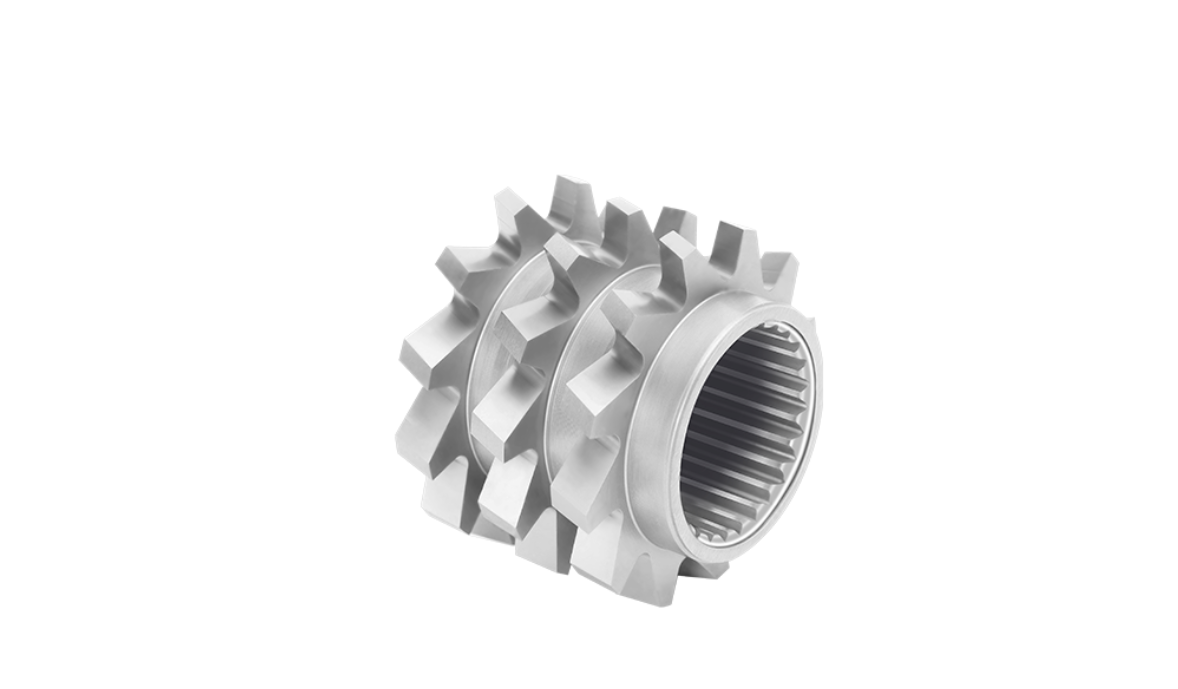
Nanjing, Jiangsu Nov 12, 2026 (Issuewire.com) - How to Select Screw Elements for Carbon Black, Color, and Additive Masterbatch Production Masterbatch production differs significantly from reinforcement-oriented compounding. The objective is not primarily to improve the mechanical properties of the final polymer, but to produce a highly concentrated, uniformly dispersed pigment or additive carrier for subsequent let-down. High loading, dispersion quality, controlled thermal history, and frequent product changes therefore place specific demands on screw configuration. The selection ofScrew Elements for Carbon Black, Color, and Additive Masterbatch Production (https://www.lesunscrew.com/products/screw-element/) should be based on the dispersion mechanism and processing sensitivity of each masterbatch system rather than on a generic high-shear configuration. What Makes Masterbatch Production Different from Structural Compound Extrusion? Masterbatch and reinforcement-oriented compounding may use the same twin-screw extrusion platform, but their processing objectives are different. In glass-fiber, mineral-filled, or other reinforcement compounds, screw design is often driven by filler incorporation, polymer-filler interaction, and the retention of mechanical properties. Masterbatch production instead focuses on achieving high pigment or additive concentration with consistent dispersion and downstream let-down performance. Pigment loadings can be substantial, with carbon black, inorganic pigments, and TiO commonly processed at high concentrations. This makes feeding, wetting, deagglomeration, and melt homogenization closely interconnected. At the same time, frequent color changes make material hold-up and cleaning performance important production parameters. How Should Screw Elements Be Selected for Carbon Black Masterbatch Production? Carbon black is particularly demanding because its primary particles form fused aggregates, while larger agglomerates can form through secondary association. The practical dispersion objective is to break down agglomerates and distribute the carbon black aggregates uniformly through the polymer matrix, while achieving sufficient wetting and preventing re-agglomeration. Excessive mechanical energy is not automatically beneficial because it increases melt temperature and specific energy input and may damage the polymer carrier. The screw configuration should therefore provide sufficient dispersive mixing without creating unnecessary thermal load. Kneading elements can supply the stress required for deagglomeration, while distributive mixing elements help repeatedly divide and recombine the melt to improve concentration uniformity. The required balance depends on carbon black grade, loading, carrier viscosity, and dispersant system. Feeding geometry is equally important. Carbon black has low bulk density and can present significant powder-handling and feeding challenges. A stable conveying section and, where required, appropriate side feeding or split-feed arrangements help maintain a consistent solids supply before intensive mixing begins. How Should Screw Elements Be Selected for Color Pigment Masterbatch Production? Color masterbatch requires effective pigment wetting, deagglomeration, and subsequent homogenization. The appropriate mixing intensity depends strongly on pigment type. Inorganic pigments such as TiO and iron oxides generally tolerate higher thermal exposure, although their high loading and, in some cases, abrasive characteristics place additional demands on the process section. Organic pigments can be more sensitive to temperature and residence time, making thermal control particularly important. Moderate dispersive mixing followed by distributive homogenization is often more appropriate than simply maximizing shear throughout the screw. Mixing elements should be selected according to pigment loading, carrier viscosity, dispersion requirement, and thermal stability. Distributive elements such as TME, SME, or ZME (https://www.lesunscrew.com/products/mixing-screw-elements/) may be incorporated where their flow-splitting and recombination characteristics suit the formulation, but none should be treated as universally optimal for all color systems. Thermal management must be considered together with screw geometry. Increasing screw speed or mixing intensity can increase mechanical energy input and melt temperature. For heat-sensitive pigments, maintaining the required dispersion level with the lowest practical thermal load is generally more important than pursuing maximum shear. How Should Screw Elements Be Selected for Additive Masterbatch Production? Additive masterbatches contain functional ingredients such as antioxidants, UV stabilizers, slip agents, antistatic agents, flame retardants, and nucleating agents. Unlike high-loading pigment systems, the principal challenge is often the uniform distribution of a relatively small amount of active material throughout the carrier resin. Poor distribution at the masterbatch stage can translate directly into inconsistent additive concentration after let-down. For this reason, the screw configuration generally emphasizes controlled distributive mixing rather than unnecessarily intensive dispersive mixing. The appropriate element sequence should provide repeated material redistribution while maintaining sufficient conveying capacity and avoiding excessive residence time. The required intensity nevertheless depends on the additive's physical form, concentration, carrier resin, melting behavior, and tendency to agglomerate. Thermal history is also critical. Some stabilizers, reactive additives, and other functional ingredients can degrade or volatilize when exposed to excessive temperature or prolonged residence time. The screw configuration therefore needs to establish an appropriate balance between mixing efficiency, residence-time distribution, and thermal exposure rather than simply maximizing mixing intensity. How Does Changeover Efficiency Influence Screw Element and Barrel Design? Changeover efficiency is a major consideration in color and additive masterbatch production because residual material from a previous formulation can contaminate the following batch. The problem is not limited to the visible screw surface. Material retained in poorly swept areas, geometric transitions, clearances, and other hold-up zones can continue to appear during subsequent production. Screw geometry should therefore support effective material displacement and self-wiping behavior while avoiding unnecessary dead zones. Closely intermeshing co-rotating screws are widely used in masterbatch production partly because their self-wiping action helps reduce material retention. Barrel bore condition and internal surface quality also influence cleaning behavior. A stable, well-finished working surface reduces the tendency of pigments or additives to adhere and makes purge operations more predictable. For plants producing many colors or formulations on the same extruder, these details can have a direct impact on purge consumption, downtime, and off-spec material. What Screw and Barrel Surface Treatments Support Masterbatch Quality? Masterbatch applications do not always require the extreme wear resistance associated with highly abrasive filled compounds, but surface condition remains important. TiO and some mineral pigments can still impose significant wear, while certain additives or flame-retardant systems may create corrosion concerns. Material selection should therefore be based on the actual combination of abrasion, corrosion, temperature, and production conditions. Nitrided steels can provide a suitable balance for many standard masterbatch applications, while higher-alloy or corrosion-resistant materials may be justified for more demanding formulations. More important than hardness alone is maintaining a stable working surface without pitting, excessive roughness, or embedded contamination. Surface integrity contributes to consistent material release and therefore supports both product quality and changeover performance. How Does Lesun Screw Support Masterbatch-Oriented Configuration Deign? Lesun Screw (https://www.lesunscrew.com/company-profile.html)supplies conveying, kneading, and distributive mixing elements for twin-screw compounding, including SME, TME, ZME, and CKE geometries. These elements provide different combinations of conveying, material redistribution, cutting, and recombination functions, allowing the screw configuration to be matched to the processing objective rather than relying on one standard mixing layout. For masterbatch applications, configuration selection can consider pigment or additive loading, carrier resin, dispersion requirements, thermal sensitivity, feeding method, throughput, and changeover frequency. Screw elements are assembled on splined shafts to form the required screw configuration, allowing the processing section to be adapted to different formulations and operating conditions. Lesun also supplies screw barrels and related components for twin-screw extrusion systems, supporting configuration requirements from feeding and melting through mixing and metering. Conclusion Masterbatch screw design is not simply a matter of applying the highest possible mixing intensity. Carbon black requires effective wetting and agglomerate deagglomeration while controlling thermal and mechanical energy input. Color masterbatch requires a balance between pigment dispersion, homogenization, and pigment-specific thermal stability. Additive masterbatch places greater emphasis on uniform distribution and controlled residence time. Across all three categories, screw element selection should be considered together with feeding strategy, melt temperature, residence time, material hold-up, and changeover requirements. A configuration matched to the specific masterbatch formulation can improve dispersion consistency, reduce unnecessary thermal load, and shorten cleaning and product-change intervals. Further product information and configuration references are available at https://www.lesunscrew.com/.
Source :Lesun Screw
This article was originally published by IssueWire. Read the original article here.
More News







Recommended










YOUR NEWS, OUR NETWORK.
Do you have Great News you want to tell the world?
Be it updates about your business or your community, you can make sure that it’s heard by submitting your story to our network reaching hundreds of news sites across 6 verticals.